
Editorial: California is choosing natural gas over clean energy
By Jameson McBride and Ted Nordhaus
Closing Diablo Canyon will harm California’s climate progress. It’s time for the state’s leaders to step up and save it
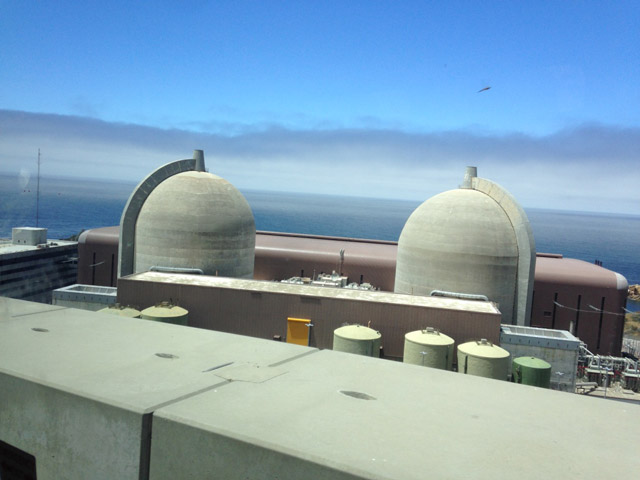
–Faced with a recall election this year, California Governor Gavin Newsom is scrambling to ensure that the lights will stay on this summer. Rolling blackouts during a heatwave last August sent a clear warning: utilities didn’t have enough power to meet periods of high demand. The pending 2025 closure of the Diablo Canyon Nuclear Power Plant, the state’s largest source of clean electricity, will only make the situation worse.
In response to last year’s blackouts, the State Water Resources Control Board has quietly extended waivers to natural gas plants up and down the California coast that had been scheduled to close because they use ocean water for cooling, exempting them from a ban on the practice that the board established in 2010 when Newsom was its chairman.
These plants are among the dirtiest in the state and disproportionately impact low-income communities of color. Allowing them to continue to operate blows a hole in the state’s climate goals.
Newsom, the California Public Utilities Commission, and the water board all insist that the waivers are a temporary fix while the state builds more renewable energy. But with Diablo slated to close, don’t expect dirty power plants to shut down anytime soon.
The Union of Concerned Scientists, a longtime opponent of nuclear energy, recently released a devastating analysis acknowledging that the Diablo closure would result in a nearly 10% increase in California’s CO2 emissions relative to baseline — and the state missing its 2030 climate targets.
Much of this could have been avoided had Newsom been willing to waive the once-through cooling rule for Diablo Canyon instead of for gas plants, which Pacific Gas and Electric repeatedly asked for. Had it been granted, PG&E could almost certainly have relicensed Diablo, ensuring that the plant would provide clean and reliable electricity to the state for many decades to come.
But even though PG&E told Newsom and the water board that they would be forced to close the plant if it wasn’t granted a waiver, Newsom and the state’s environmental community forged ahead, insisting that the closure of the plant would not increase California’s carbon emissions or worsen air quality because the plant would be replaced with renewable energy, efficiency, demand management, and energy storage. That was the argument underlying a previous newspaper editorial in support of its closure that was published in 2016.
The claim that closing Diablo would not reduce emissions was based upon an analysis underwritten by Friends of the Earth, which has long campaigned to close the plant, and was conducted by consultants connected to the state’s renewable energy industry. But in 2018, when the final agreement to close the plant was announced, the PUC’s order suggested otherwise. Diablo’s clean generation would be replaced predominantly by natural gas.
That is exactly what is happening. Renewable energy generation continues to grow. But because it is intermittent, it requires backup generation to assure that the lights stay on when the sun doesn’t shine and the wind doesn’t blow. Energy efficiency, demand management, and large batteries can help take some of the edge off of peak demand. But the state still needs enormous amounts of generation that must be available to fill in for the lulls in renewables at both hourly and seasonal time scales.
That challenge has only become greater as the share of solar energy has increased in the state’s energy mix. And it will be harder still when Diablo closes, as gas plants that today vary their output to balance renewables will need to run much more to replace the constant electricity that Diablo currently provides.
There is an obvious alternative to keeping the state’s dirtiest gas plants online for years to come. But it will require Newsom and the state’s environmental community to admit that they were wrong to advocate the closure of Diablo back in 2016.
The truth is that Diablo is neither too old nor too expensive for PG&E to continue to operate. It began a license renewal process in 2009, and it could pursue a further license extension to the 2040s. PG&E operates Diablo at a profit and it could receive further financial support under California’s clean electricity law, which allowed nuclear energy to qualify for state support but was passed after the decision to shutter Diablo had been approved by the PUC.
Even a short-term waiver of the once-through cooling rule would allow PG&E to seek a license extension for Diablo from the Nuclear Regulatory Commission. This would allow the plant to continue operating until the state can figure out how to meet its electricity needs with renewable energy and without extending a lifeline to fossil fuel plants that should have been shuttered years ago.
Keeping Diablo open won’t, by itself, solve California’s electricity problems. But at present, the state is already in a deep hole, without sufficient electricity capacity to meet peak demand in the event of another long spell of high temperatures like last year. As we gird for what is likely to be another hot and dry summer, it’s time for Governor Newsom to stop digging and keep Diablo open.
Jameson McBride is senior climate and energy analyst and Ted Nordhaus is founder and executive director at the Breakthrough Institute in Oakland. On Twitter, you can follow Jameson @jamesonmcb and Ted @TedNordhaus.