
Trump Leads Biden in Polls as Tensions Escalate Around the World
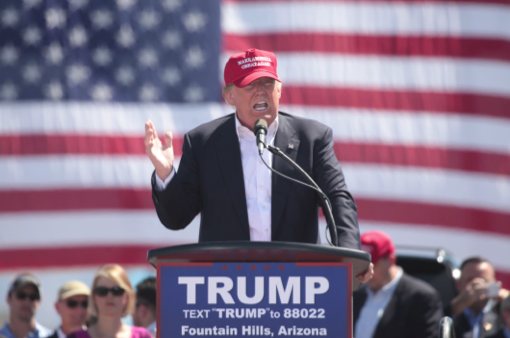
Donald Trump now officially leads Joe Biden in the opinion polls, with 3% of voters favoring the controversial former president over the Democrat incumbent. As the 12th-month countdown to the 2024 US election begins with two major wars raging overseas, the impact of a Trump victory on the current geopolitical landscape could be huge.
In this article, we take a look at some of the flashpoints that have emerged in international relations over the past year and analyze the potential impact of another Trump presidency on issues that include the war in Israel, Russia’s prolonged Ukraine invasion, and China’s tensions with Taiwan.
How US Voters Turned Back to Trump
It’s common knowledge that Donald Trump’s first term as US president ended in controversial circumstances, from the Capitol raids to his claim that mail-in voting had caused election irregularities which robbed him of a second term.
From a liberal voter’s point of view, however, Biden’s victory marked a return to normal politics and an opportunity to forget an unfortunate era dominated by Trump’s oversized personality and his refusal to adhere to the unspoken rules of political life.
As 2024 approaches, many Democrats are scratching their heads as they face the prospect of another Trump presidency – a scenario that seemed almost impossible just four years ago.
With odds below +150, Trump leads Biden at the Bookmaker’s office as well as in the polls. Those who bet on presidential elections at Bovada would notice that the incumbent is placed at +180 or higher, shifting away from the Democrats, as economic concerns and Biden’s perceived poor state of health give Trump the upper hand.
As the US political landscape changes yet again, the international community is watching apprehensively.
Trump’s first-term woes fade from voters’ memories in the land of second chances
The political news has been peppered with Trump-related headlines in the years since his defeat to Biden, and many of these have been far from complimentary.
Accusations of election interference, the controversial hush-money case involving adult movie actor Stormy Daniels, and the alleged removal of confidential classified documents from the White House paint a picture of chaos during Trump’s first term in office.
Against this backdrop, political and business leaders in countries around the world are watching on cautiously as the controversial Republican looks set to secure nomination. Furthermore, if recent polls are to be believed he stands an excellent chance of being elected next November.
Despite his controversial past and willingness to cross lines that have spawned multiple federal investigations, Trump’s supporters seem intent on giving the former president a second chance to carry out his “America first” agenda.
A second term for Trump could have wide-reaching effects on several geopolitical crises that are unfolding at present. Of particular concern is the war in Israel against Hamas and rising tensions in the Pacific between China and Taiwan.
Will Trump ignite a major war in the Middle East?
Political tensions have always been high in the Middle East, and the situation in Israel is a major regional flashpoint.
The war that Prime Minister Netanyahu is currently waging against Hamas in Gaza following a terrorist attack against Israeli settlers in November is the latest in a series of conflicts stretching as far back as the 1940s.
As with many conflicts, the tensions that have perpetually existed between Israelis and Palestinians have been exacerbated by the influence of external nations including the United States, Iran, and Russia.
Should Trump return to the White House in 2024, he may be tempted to deploy the US military in support of Israel, or in the worst-case scenario in an all-out defensive against Iran.
Given the size and readiness of the Iranian army, US military action could run the risk of sparking a regional war and jeopardizing the lives of millions of people in the process.
Would Trump act to prevent an invasion in Taiwan?
Another important geopolitical risk facing the US today is the potential for a Chinese invasion of Taiwan, forcing the island state to surrender its sovereignty to Beijing.
Geopolitical tensions around this issue have been rising in the past few years, with China carrying out military exercises and rehearsing naval blockades in the seas around Taiwan.
These actions have sparked concerns from both the US and its largest military ally in the region, Japan, that an invasion may be imminent.
Modern Taiwan came to exist in the late 1940s and though its sovereignty has never been officially recognized by all countries, it has undergone many decades of impressive development to become a high-income nation which produces 90% of the world’s advanced semiconductors.
- Historically, the US naval presence in the Pacific as well as United States military bases in Japan and South Korea have served as a powerful deterrent against a Chinese invasion.
- The crucial question on the minds of political analysts today is, should there be an invasion of Taiwan in the near future, would the US and its allies be ready, willing, and able to defend Taipei?
Taiwan’s right to independence aside, the question of whether a Trump administration would really risk going to war with the world’s second biggest economy and a major trading partner doesn’t have a clear-cut answer.
Analysts view Trump’s anti-Chinese rhetoric as a sign that he may be willing to engage militarily in this scenario, while others have pointed to his resentment of US military deployment in foreign countries and the high cost that the US taxpayer bears for providing its allies with military assistance.
Whatever military action in the US ends up taking – if any – it’s fair to assume that a Trump White House may not be the ideal power structure to ensure peace in the Pacific.
Final thoughts
As the US election approaches, with Trump as the presumptive Republican candidate leading Biden by several percentage points, concerns are mounting about the war in Israel and the potential for a Chinese invasion of Taiwan.
While the election race heats up in 2024, all eyes will be on Washington, Tel Aviv, and Beijing, as analysts try to calculate the odds of a Trump victory and the potential fallout for two of the world’s high-profile conflict zones.