How To Train Your Team on Preventative Maintenance: A Step-by-Step Approach
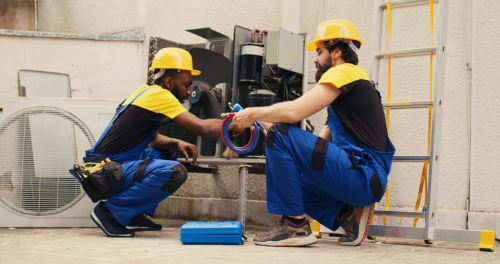
At every moment of your company’s operations, the smooth functioning of the equipment is a must. It determines the quality and efficiency of the work done by your company’s systems.
If not, it can adversely affect the image and reputation of the company.
Hence, preventive maintenance is an effective approach for training your team to avoid such dire situations. This is a systematic way to check on the equipment, extend its lifespan, and reduce repairs and downtime.
For this reason, the focus on process production plays a crucial role throughout the company’s existence. It also improves the reliability of the company’s operational equipment.
Such maintenance is useful in various sectors, such as manufacturing, healthcare, utilities, etc. So, a well-structured plan for a preventive maintenance program can train your team with essential knowledge and skills.
As a result, they can handle any maintenance issues and prevent unforeseen delays with optimal work. Follow this step-by-step approach to train your team on preventive maintenance.
1. Assessing the Needs
Before starting this training, it is essential to assess the state of the equipment. The assessment of the equipment is important because they are the reason for preventive maintenance.
The equipment is a form of a physical asset of your company, making it a valuable commodity. So, ensure to perform an asset tracking activity to examine the equipment.
This will help you to arrange a plan that will include all the necessary measures to keep them up to date. You also should determine whether it is necessary to interview your employees regarding the concept of preventive maintenance.
It will help identify aspects that require improvement from the employees.
2. Developing the Training Plan
Now that you have checked your team skills, it is time to come up with an effective training plan which will address the needs of the employees. It is important to develop a training plan that includes the procedures that will complement the training objectives.
For instance, you can introduce procedures for improving the skills of your team for handling the maintenance management software. Such software is designed to guide others on maintenance methods.
Furthermore, the other methods used in the training may include workshops, equipment management practical demonstrations, etc.
3. Choosing the Training Materials
Your team should be provided with the necessary materials used in the training for system preventive maintenance. You need to use the materials that are beneficial for the training aims and goals.
The materials can be videos, manuals, software guides, etc. By using such materials, your team will acquire a deep knowledge of equipment. For example, videos are useful for detailed demonstration of maintenance procedures.
4. Create an Engaging Environment
When carrying out the training, create an engaging environment that will empower employees to participate.
For instance, you can divide the teams into groups for a competitive challenge to apply the maintenance skills and knowledge. It can make them take the initiative for better performance.
Moreover, quizzes and group discussions should be scheduled in a way that will allow the team to engage in the practical tasks. This approach assists in making the training session lively.
5. Test Your Team
Once the training is over, you should arrange a question-and-answer or quiz session. This will allow you to analyze what the team has grasped from the training program.
It assists in ascertaining whether they will be able to perform several tasks such as equipment upkeep. Furthermore, it is also helpful to use the test results as a reference to upgrade their training. Hence, the parts which were difficult for them should be paid more attention.
6. Set the Maintenance Schedule
When you make your training plan, try to make it in a way that you can use it in daily routines of maintenance procedures. For example, it is helpful to use the training sessions to ensure that the company’s physical assets are well maintained.
It is also necessary to attempt to set a detailed schedule for the maintenance. This can be done by organizing activities, setting a time limit, and assigning people to complete the work.
You should also make them adhere to the set standard operating procedures (SOPs) when conducting the maintenance procedures. They are specific regulations from the various industries that must be followed to perform maintenance activities.
7. Regular Monitoring
It is important to monitor and facilitate the training programs’ results to sustain their high efficiency. You can assess their reports in logs or checklists of the maintenance process and identify the issues.
Furthermore, try to provide them with solutions to the issues faced by them. It is also helpful to engage experienced seniors to oversee and assist them during the tasks.
Conclusion
Being the owner of a company or business can be overwhelming. You must always safeguard and preserve its assets, such as tools, equipment, vehicles, etc.
Thus, preventive maintenance is a method of systematically protecting equipment from the emergence of unfortunate situations. For such maintenance to be effective, your team should be trained to do preventive maintenance correctly.
For example, your team will become skilled in maintenance procedures through evaluations, scheduling maintenance, and other approaches. As a result, it will lead to efficient and effective work that benefits the company and its image.