
From the mayor: A 1944 Christmas story
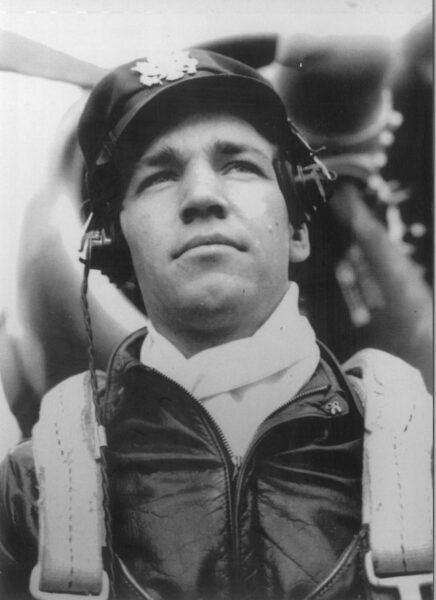
John Hamon Sr.
Written and submitted by Paso Robles Mayor John Hamon Jr.
– Born in Oklahoma in the autumn of 1921 to Simon and Anne Hamon, John Reuben was three years old when the family moved to California’s Central Valley with other relatives ahead of the great southern plains dust bowl that so badly devastated farming in the mid-west during the late ’20s and early ’30s. Growing up, he went to school, excelled in sports, and worked with his parents and three sisters in the farm fields around Wasco picking cotton and potatoes.
After his high school graduation in 1939, he pursued his dream of becoming a pilot for the next two years and entered a pilot training program at Bakersfield Junior College. The program taught students aeronautical engineering and learn to fly the single-engine 65 hp Piper Cub. He earned his Airman’s Certificate no.109408 in 1941 and continued on with his advanced training.
When the United States entered WWII in December of 1941, all flight training programs were required to be moved inland a minimum of 100 miles from the coast. Hamon‘s class was relocated to Independence, California on the east side of the Sierra Mountains, and later to Lone Pine for secondary training where he flew the more powerful Waco F7 and Stearman biplanes.
With flight training completed, he came to Lompoc, California where his family had relocated. John Hamon worked with his father who had opened a plumbing business and learned the trade which was to later become his professional career after the war. With America at war, Hamon volunteered and was enlisted into the U. S. Army Air Corps in 1942. Because of his private pilot skills, he was commissioned as a Flight Officer and was called to active duty on February 17, 1943. Advanced multi-engine training took him to Buckley Field in Colorado and then onto a succession of other bases in the western United States.
He received his Army Pilot wings on February 8, 1944, at Douglas Arizona, and was soon assigned to the 8th Army Air Corps as a co-pilot flying the four-engine B-17G Flying Fortress bomber with the 729th squadron of the 452nd Bombardment Group in the European Theater of Operations. The group’s motto was “Labor Ad Futurum” – Work for the Future. Their base would be station no.142 at Deopham Green just north of the small village of Attleborough in northeast England. The 452nd bomber group departed the United States with their planes and flew to Greenland, then Iceland, and on to Valley Wales, England where they arrived July 20, 1944.
On his first mission, Hamon thought that he may never make it home again. Several B-17s were lost from his group and in his mind, it would be just a matter of time before he too would go down. At that time, aircrews were required to complete 25 missions before being allowed to return to the U.S. It was not until his 22nd mission, just three short of completing his tour, did the odds catch up with Hamon. It was on Christmas Eve, 1944 that his plane, “Dorothy C” #44-8249, would receive a very serious direct hit from ground artillery. His actions in the next few minutes would determine the destiny of so many things both present and future.
The Battle of the Bulge, Germany’s last great offensive move to try and retake the port of Amsterdam, had been underway for two weeks. The target assignment for the 452nd on this mission would be a weapons factory in Darmstadt, a city in western Germany just south of Frankfurt. This air mission flown on Christmas Eve December 24th1944 would be noted in World War II history as the most allied aircraft put up in a single day against Germany. The winter of 1944 was also noted for the coldest in recent memory, and poor weather had grounded the Mighty 8th Air Force for some time.
But on this day, the weather had cleared over most of Europe and a “Maximum Effort” mission was called for by Allied Command for all American and British Fighter / Bomber groups in England. It was planned to be a powerful blow to Germany, and it would be. Everything that could fly against the enemy would be launched to either resupply our troops surrounded within the Battle of the Bulge area around Bastogne via air drops or to strike targets within Nazi Germany on this very cold winter day.
Hamon’s plane was regularly selected to be the #1 lead plane for 452nd missions because it was one of a few B-17s assigned to the group that was equipped with PFF or “Pathfinder”. This apparatus was a special ground scanning radar device attached to the belly of the bomber in place of the ball turret. The recently developed electronic gear was able to roughly indicate buildings and cities on the ground even through an overcast cloud cover. Its purpose was to deliver bomb loads more accurately when there was not enough visibility to target normally from their altitude of 25,000 feet.
The plane also carried an extra navigator to help lead the squadron to the target as precisely as possible. The two navigators, and the “Micky“(PFF) operator would work together to get the bombardier close enough to the target so that he could make final steering corrections through the integrated Norden Bombsight. Upon arriving at the target, the #1 lead plane would begin the bomb drop by releasing a special bomb that also trailed a line of smoke all the way to the target along with their other bombs. It would be a visible signal to all other aircraft in the formation to drop or “toggle” their bomb loads on the #1 lead plane’s release.
The target area this day was forecast to have dense haze which would make visual bombing poor. And so, it was for the December 24th mission to Darmstadt that John Hamon’s crew would again be selected for the lead position for this Maximum Effort mission to Germany. The regular pilot, Lt. Jay Kenworthy stayed in the pilot’s position and the group commander, Major Carl Thomajan, would take the co-pilots right seat normally filled by Hamon. Thomajan would act as command pilot for the entire squadron. It was a fortuitous change that would give Hamon a chance to save his life several hours later.
Co-pilot Hamon as the second officer would reposition to the rear of the B-17GSH into the very small and confined tail gunners’ position and serve as the Formation Officer for the 36 plane wing of the 729th squadron. Kneeling as a tail gunner would do, this position had a wide viewing angle both up and down and side to side. The formation officer’s duty was to report to the commander on the condition of the higher, lower, and (their) middle V formations of B-17s trailing behind them, the flak accuracy, and enemy fighter observations.
Environmental conditions in the B-17 were such that aircrews had to fight the extreme cold of -49 degrees below zero and the lack of oxygen in the thin air of 25,000 feet. This particular day’s mission was scheduled to last over nine hours from takeoff to landing. Aircrews wore over their uniform a heated coverall that had electrical heating wires woven into the garment. It was to be plugged into the plane’s electrical system for additional heat.
Over this heated suit, they wore their sheep skin jackets, pants, boots, gloves, maywest water life preserver, parachute harness, and headphone caps. They were required to a plug in their breathing masks into the aircraft’s oxygen system after reaching 10,000 feet in altitude to avoid hypoxia. The bulky gear did offer some protection from the extreme cold and thin air.
Due to the thick outer layer of clothing and the tight conditions of some of the battle various stations in the B-17, it was routine for aircrew not to entirely join their parachute directly to their body harness. Rather, the crew would connect just one of the two risers of the parachute pack to themselves to remain connected to the lifesaving device yet still have freedom of movement.
The 452nd’s inbound course to the target took the group directly over the embattled Americans defending against the large German Ardennes offensive which had begun on December 16th. The Battle of the Bulge ultimately surrounded U.S. troops holding the town of Bastogne in eastern Belgium. At about 1:28 pm after just crossing the northern border of Luxemburg and Belgium, near St. Vith and flying at 25,000 feet, German 88mm artillery flak canons located near the border of Germany began firing at the group’s formation.
The cannon rounds were timed to explode at the approximate altitude of the bombers but were initially seen behind the group. These resulting balls of lethal exploding shrapnel would inflict damage by reaching out to the passing aircraft in a broader killing span rather than having to make a direct hit which was a rare occurrence. The remains of the flak bursts would leave very visible patches of black smoke which Hamon originally reported to the command pilot. He stated that they were trailing behind the entire group, exploding at the same altitude, and closing in.
With great concern, Hamon watched several flak bursts behind them and in perfect trail to their flight path, quickly closing the distance towards their lead aircraft. Clearly this gun crew was aiming for the lead ship of the group. Hamon again reported this information and strongly suggested that the commander move the plane slightly off the current course to avoid an immanent close explosion or hit. Major Thomajan refused replying that the squadron had already reached its I.P., or the “initial point” of the bomb run to the target. Course changes were not allowed after the IP had been reached.
Within seconds, the bomber was violently racked by a tremendous explosion. The German gunners had certainly made the rare direct hit on their target. From the debriefing interrogation reports later made by the other 729th crews in the flight formation, the lead ship, 44-8249, had taken a direct flak hit slightly behind the number three engine and near the fuselage. A three-foot-wide hole could be seen in the wing.
With the plane trailing smoke, it immediately started a slightly downward right hand, 180 degree turn to avoid the lower flight of 12 B-17s on its left. It appeared Kenworthy and Thomajan would try to return to England but less than a minute later, the plane entered a steep spiral dive. Four parachutes were observed to have been seen. Further crew reports observed the right wing of the B-17 in flame, finally folded back at about 12,000 feet from the extreme air pressure. Final reports said the plane broke apart and exploded before it reached the ground.
Inside the plane, it was clear to the crew that their plane had been hit very severely and that they needed to take immediate action to save their lives as they were going down. Of the 10-man crew, five would survive the impending crash.
The two navigators, 2nd Lt. Russel Haas and 1st Lt. Buell Hoagland along with bombardier 2nd Lt. John Salyer made their escape directly through the new hole in the nose that appeared after the impact. The large clear plexiglass nose cone of the B-17 bomber where the bomb aiming is done had been completely blown off from the flak’s explosive concussion.
For these three, this new exit which was now just in front of them, would be the fastest route out and therefore held the greatest possibility of survival. They crawled forward against the nearly 200-mile-per-hour rush of freezing air that was now blasting them. Climbing over the bombsight, they fell clear of the diving plane and opened their parachutes.
The fourth crew member to make it out a short time later was 1st Lt Glen Gladfelder, the “Mickey Operator”. He was trained to operate the very special (PFF) Pathfinder radar equipment in this B-17 and was the closest crewmember to the flak explosion, had been seated at his position on the right side of the plane’s radio room.
With him was the communications operator, T/Sgt Vincent Sullivan, who was last seen slumped over his radio table on the left side of the compartment apparently killed from the explosion or shrapnel. This area of the plane was directly behind the bomb bay and ahead of the radar device mounted in place of the ball turret and single waste gunner position assigned to S/Sgt Carl Lambert.
Gladfelder sensed the airplane’s increasing speed from its dive angle and the ensuing centrifugal force of the spin made it difficult for him to move toward the normal exit. The plane then began to tear itself apart and suddenly a hole in the fuselage opened just behind Gladfelder’s seat. He made this new hole his exit and jumped free pulling his parachute handle to escape the violent death that would befall all remaining crew on board in the next few seconds, save all but one, Flight Officer John Hamon, still in the tail gunner’s position.
With the obvious and immediate knowledge of what had just happened to the B-17, John Hamon also knew that this direct hit was extremely serious and would bring down the bomber. From the tail gunners’ position, there is little to no room to get back to the main exit door due to the retracted tail wheel. The Boeing Aircraft designers of the B-17 had planned for a small escape hatch specifically for this situation and it was located under of the plane’s right elevator stabilizer. Within the first few minutes after the direct hit, Hamon began disconnecting his communications and electric flight suit and began making his way forward through the narrow fuselage toward the escape hatch about six feet away.
He too felt the speed increasing from the steep angled descent and then the spinning centrifugal force also pinned him against the fuselage wall. Trapped, he strained to make the last final movements toward the hatch door. The noise of the disintegrating and dying aircraft which was carrying him quickly toward the ground was terrific. Reaching the hatch, he pulled the emergency release that jettisoned the door leaving a wide-open hole. Pulling himself out, he recalls the violent destructive sounds went quiet, and he had no feeling of falling through the open air. During the escape, Hamon’s forehead and nose had been cut up badly and his headgear had been torn off. Descending feet first, he was falling with his eyes closed.
The deep bleeding cuts to his face had quickly frozen and had become frostbitten. He quickly reached for the handle to deploy his chest-mounted parachute pack, but was petrified to find the pack was not there. In the haste of leaving the plane, he had not connected the second parachute raiser to his harness. He opened his eyes and looked up to see the parachute trailing above him from its single riser connected to his body harness.
Knowing he had only seconds before hitting the ground, he pulled the parachute pack down to him, made the riser connection and pulled the handle. The chute began to open while he was still clutching the pack. The force of its opening violently whipped his arm back damaging his shoulder muscles. The chute deployed perfectly, and he found himself alone in the very cold and crisp blue sky. He did not see any other parachutes and he wondered if he was the only one to get out.
Already very low to the ground, he was coming down into a snow-covered, forested rolling hill area. He could see a column of German soldiers and two of them began shooting at him. He could hear rifle bullets whizzing by. His chute was swinging back and forth due to the rough air so he kept it swinging to make it harder for them to hit their target. He heard a round hit the canopy so he acted as though he had been hit by rotating about in the harness and then just hanging limp in hopes that the enemy would stop firing. It worked but it was not long before the next trial would be upon him, that of landing into a forest.
The forest pine trees were about 80 to 100 feet tall, and he could see that they were planted in neat rows like an orchard. As he came closer, he noticed how fast he really was descending. There was not much directional stirring by pulling on the risers, but he did so in an effort to try and thread himself between them. Impacting the tree, his body hitting some branches, swung him away, but the canopy and lines suddenly hung up at the top part of the tree and stopped his downward movement abruptly.
Hamon was jolted by the sudden stop and was slammed swiftly into the trunk of the tree which injured his back. Alive, he found himself hanging about eight feet off the ground. He looked and saw no one and the snow-covered ground showed no signs of footprints either. He was about a mile away from the soldiers and it was important to get down and away from his landing spot as soon as possible because they would probably come looking for him.
As history would be recorded by the 452nd Bomb Group’s missing air crew report, only four parachutes were seen after Dorothy C 44-8249 had been hit and started down. Due to the time, it took Hamon to remove himself from the falling aircraft, he was too low and too far behind the remaining formation to be seen. For several months, Hamon was initially reported KIA, Killed in Action, along with the other remaining six crew members.
The German Army had reported to the Americans that the four officers who had bailed out had been captured. His parents, therefore, along with the other crew members’ families were all notified by Western Union telegram some weeks later that their sons were killed on Christmas Eve, December 24, 1944.
From his suspended position in the tree, Hamon had a hard time unlatching his leg strap as his hands were frozen and his back was hurting very badly. Finally dropping to the snow-covered ground without further injury and being about 2 o’clock in the afternoon, he decided to make his way up a hill for about a mile. The forest had no underbrush but found a cove of weeds and grass to lie down in and he soon fell asleep.
Waking about sundown, he started walking this Christmas Eve night. His plan was to move under cover of darkness in a westerly direction using the rising full moon in the east at his back as a guide toward the American lines and to also use the directional sound of V-1 buzz bombs that he could hear flying toward England.
Soon the heated flight suit that protected him so well at high altitude now became a liability from the bitter cold due to the metal wires that ran through the clothing. Waking up the next morning he found next to his hiding place a perfect Christmas present. It was a US Army heavy winter hooded jacket known as a mackinaw that was draped over a small pine tree without any snow on it. There were no signs of recent footsteps in the 18” deep snow around the tree either. It was Christmas morning, and this was clearly a gift sent from heaven. It would help to not only save his life from the freezing temperatures, but also another captured airman that he would see several days later.
As he traveled, he could see that the US Army had been through this part of Belgium and a great battle had taken place as there were many destroyed vehicles to be seen. He continued walking toward the safety of the American lines but later he saw lights flashing below him, one on each side of a road. Hamon assumed it was the German soldiers looking for him that had shot at him the day before. He knew they would see him if he moved so he stayed put behind a large tree and waited.
As they got near, about 40 feet away, the soldier on the opposite side of the road called the one on his side. He ran over to the other soldier and then they walked away from Hamon in the direction from which he had just come. Hamon took the opportunity to cross a clearing into another grove of trees and walked in these trees going north all night long.
The next day the weather turned very bad with snow and wind. His injured back became worse and he couldn’t bend my back or sit down because of the terrific pain. Hamon decided to continue walking all day and night slowly. He lost track of the days of the week, but I kept moving. There were no signs of wild animal tracts, humans or houses anywhere. He thought he was alone in the wilderness. But one day he heard voices and going to the edge of the trees he saw in a clearing, a truck with two German soldiers.
They were doing something on the ground behind the truck but as he watched them, they suddenly threw something in the back of the truck and then quickly drove off around the clearing and got out of sight into a grove of trees. Shortly after that, a German fighter plane fly over at the tree top level. Hamon could clearly see the pilot. After this, he waited awhile to see if the soldiers would return but they didn’t, so he continued walking.
At times artillery shells would fly over his head and land beyond him knocking down trees. He could tell that it was German artillery shooting at the American troops, so he went looking for the allied troops in the area where the shells had landed but found no one. During his travels, he ate snow to stay hydrated and was continually looking for any food to eat while still avoiding everyone.
The forest began to thin out and the thick snow was nearly gone. He came to a steep mountain slope where the bushes on the mountainside looked like holly as they had red berries on them. The bushes became thicker the taller they got. In these bushes he saw trails and what looked like telephone wires. Sensing danger he got away from that area and found himself walking on a plateau. The ground then began slopping down for several miles to a valley below. He could see what looked like a stream or river below.
Hamon then saw a German staff car moving along at a fast speed. He then heard artillery shells flying overhead going toward the car with the shells missing the staff car by a long distance as it went around the hill out of sight. Why would the Germans be shooting at their own vehicle he thought? He then presumed the Allied Forces had been doing all the artillery firing that he had been observing.
It was still daylight and because he was very thirsty and thinking he was getting close to the American lines; he started walking down the slope toward the stream below but there was little to no vegetation for concealment. It was a risk he but was motivated to get to the water. It got dark before he reached the river.
After having some water, he followed the river until he came to some houses along a cobble-stone street. There were only a few houses on each side of the street of this small village but at the end of one row, there was a two-story house that he thought might have something to eat in it. The time was now late, around midnight and the moon was still full and high in the sky.
Approaching the village, Hamon met a cow along the riverbank which scared the hell out of him. It had a bell around its neck which made a lot of noise as it ran down the cobblestone street. It appeared these houses were deserted as they all looked empty. There was a bridge behind the two-story house leading across the river to more houses on the other side. Hamon entered the two-story house, found a glass jar, and returned to the river to get some water to drink.
Something told him not to cross that bridge that night. He returned to the two-story house, went upstairs, and found two bedrooms one on each side of a hallway. At the end of the hallway was a large door with a glass pane and the moonlight was brightly showing through. In one bedroom there were two beds and a mattress on the floor. In the other bedroom was empty except for a table and one chair.
It had a closet which he opened to look for any food. It was empty but he got the chair to stand on and checked up on the shelf above to find a pair of shoes that looked to be for a woman. They were high top laced up patent leather shoes. Behind the shoes, he also found a stash of food. I took a can of American fruit salad and a can of sardines from the hideaway. He went back downstairs to find something to open the cans and found a knife which he used to open the fruit salad and a spoon to eat it with.
After eating the fruit salad, he felt full even though it was the only food he had consumed in about four days. He put the can of fish in his flight suit pocket for later. He also used the knife to cut off the electric wires on flight suit that went around his feet so that he could get these newfound shoes on. The shoes were very tight, but he could wear them inside my flight boots. Exhausted he laid down on the mattress on the bed and took the first real good sleep he’d had in four days.
The next morning after the sun came up, all hell broke loose. Hamon was awakened by shells exploding nearby. They seemed to be exploding across the bridge. He could hear small arms fire and was sure there was a battle going on. He looked out the tall windows almost reaching the floor and no glass in them. He couldn’t see anyone outside. I heard German voices shouting and the shelling didn’t last very long before it stopped.
Hamon heard footsteps coming up the stairs. They stopped when they saw where I had eaten the fruit salad in the hallway. He heard a baby crying and decided to go to the stairs to see where it was coming from. When he got down to the first floor, there was something was cooking on the stove in the kitchen. He found a place to hide until someone returned to the stove.
A young civilian man about thirty to forty years old appeared so Hamon showed himself and said that he was an American. The man motioned to Hamon to stay there and he went downstairs to a cellar which was off the kitchen. He came back up and motioned Hamon to come with him and they both went down to the basement. The basement was very large and there were many women and children there and another elderly man.
They didn’t know how to speak English but they motioned Hamon to sit down and then he left. The young man came back with another elderly man who could speak a little English. Hamon told him that he was an American and asked him who was doing all the shelling. He didn’t know but he said the Americans had been there and were gone now. He said that if the Germans were to catch Hamon there with them, they would kill all of them.
He explained by moving his fingers across his throat! He asked Hamon to go back upstairs and to leave when it got dark. Hamon then looked into his pocket where he found he had a crumpled cigarette which he gave to the man. When he got back upstairs, he laid down for a while longer, then the shelling started again. Hamon heard footsteps on the stairs coming up very fast. It was the two men from the basement, and they motioned for Hamon to stay on the bed while they got the rest of the food from the closet shelf and then they returned to the basement.
The shelling continued with one shell hit a building nearby setting it on fire. He could smell the smoke as it came through the open window. Nothing more happened that day. When he was getting ready to leave that night, he saw people rushing around and followed a ravine or a small ditch towards a small stream. It was very dark, and no moon had risen yet.
Flares were being shot off as he walked toward the stream, so he didn’t move because he knew it would draw attention to his location. When he got to the stream, he saw a blast of gunfire from across the water coming right at him.
He dropped like he had been hit and crawled away from there for a few yards and after period of time he quickly walked away. He traveled all that night and the next day following the stream. He felt so hungry so he decided to eat the sardines but didn’t have any way to open the can so he got a rock and smashed it open. He got mostly juice from the smashed container so that’s all he had to eat that day. The second night after leaving the house the weather got very bad again with freezing wind and snow. The moon was full and bright again.
He was beginning to feel bad by this time. Often the clouds were coming over and hiding the moon, then when the clouds left, the moonlight was bright again. Hamon saw a light in the distance and started walking toward it. He came across a road and a lane leading up to this house which set back away from the road. Hamon began walking up to the house which had a small porch and a bush with no leaves beside the door and in front of a window. The window had the blind pulled. As he was about to knock on the door when he heard voices inside like a party was going on.
There were women and men inside and they were speaking German. He began stepping off the porch to leave when the door suddenly opened. Hamon quickly flattened himself against the house as two German soldiers came out. He could have reached out and touched them and he could smell alcohol on their breath. They stepped off the porch and it sounded like they were having an argument.
One soldier walked down the lane and the other went back into the house. It was dark where he was standing between the window and the door but why the other soldier didn’t see him standing there, it was a miracle, it was so close.
When Hamon left there, he didn’t want to continue down the lane where the first soldier had gone so he went under a barbed wire fence and into a field heading back toward the road. It was still pretty dark and there was snow covering everything but just before he got to the road the moon that had been covered by dark clouds broke out and the area lit up brightly to come into view of a whole line of German soldiers walking down this road.
They called to Hamon in German, but not understanding the language, he threw his hands up in the air and didn’t say anything to them. He walked toward them continuing to hold his hands up in the air. One of them said in English, “American?“ Hamon said, “American, yes.”
The man then spoke very rapidly in German to the other men who had their guns pointed at Hamon and who thought for sure they were going to shoot him right there. This man turned out to be a German Red Cross person who spoke English. He put Hamon beside him and they continued marching with the rest of German soldiers.
In a short distance, they came to a town. There were dead frozen animals lying around and signs of a big battle that had happened there. He also heard a big church bell ringing out slowly. The time was early morning when he was taken to a big building that had one big room crammed full of German soldiers mostly lying on the floor talking. It had a stove that heated the whole room. A soldier who was in charge, who was not an officer, searched Hamon. He had a silver cigarette lighter which his mom and dad had sent him in his pocket.
The soldier took it away and kept it. They gave him some food to eat which looked like a rabbit leg and some German flatbread. The German Red Cross man continued to have a conversation with him in English. He told Hamon there were some civilian people held up in a house between the Allied line and the German line.
He asked Hamon what he thought the Allied Forces would do if he took a white flag to that house to rescue these people. Would it be safe to do so? Hamon said I was a pilot and flew planes and didn’t know what the army would do about that. From this conversation, Hamon was sure he had reached the front lines and was captured steps away from the safety of the Allied Army.
The next morning Hamon was taken by two soldiers to a house not far away and then into a bedroom in this house. There were two high-ranking officers dressing. Hamon saluted but didn’t get a salute back. One officer talked to him in perfect English. He asked Hamon why the Americans were fighting them? He replied, “It would only be a matter of time before you’d be over there fighting us.”
He then turned to the other officer and said, “propaganda, propaganda.” Then he spoke to the escorting soldiers in German apparently giving him an order and the soldiers then took Hamon out of the room. They forced him down a path into the woods and made Hamon walk in front of them.
Not understanding German, Hamon thought for sure they were instructed to remove him from their area and to execute him. Eventually, they came to a road and a short distance further a barn with a red cross on the roof. It was a field hospital. Hamon saw a soldier digging a grave and still wondered if it might be for him. Inside, tensions began to relax as he was given a pack of Lucky Strike cigarettes and some matches. There was a German soldier who could speak English being treated there and he kept bumming cigarettes from Hamon.
He said, “You have already won the war, and it will be over soon.” Hamon was later put on a truck that night and went to another barn which had about eight or nine other American army prisoners in it. One prisoner said, “Tonight is New Year’s Eve,” that’s when Hamon knew it had been a week since he had been shot down.
The next day they traveled in a truck at a slow pace. Hamon could see tanks hidden under the trees and some German soldiers now and then. At one time they were stopped by a group of German soldiers who wanted to know why the Americans were riding in the truck and they were walking. They pointed their guns at the prisoners and wanted to shoot but the guards talked them out of it.
They came to an area where a P47 was strafing so they quickly got off the truck and took cover in a house. The group of American prisoners continued on and finally reached Gerolstein late at night. They were put into a large building with wooden floors with many other American prisoners sleeping on the floor. Hamon didn’t know how many men he saw but there were a lot of men, all non-coms.
Conditions were very poor. They had very little food and everyone was always hungry. The men were given frozen potatoes to eat which had wire worms. Sometimes they got cheese to eat and some bread along with a soup which they called “Tree Soup” because it looked like it was made of tree twigs.
After a few days there, Hamon got a bad case of dysentery. These non-com American soldiers were being kept there to work cleaning up after the town was bombed by our planes. Hamon was not required to work because he was an officer. Since he was the only officer, it was his responsibility to complain to the Germans about the lack of food and living conditions. There was one non-com in charge who knew the ropes and he and Hamon did talk to the commandant about their demands.
After about a week there, twenty-five or so men and Hamon were called out and given some food which was to last all of them on a long march that was about to happen. The food amounted to half a loaf of bread, small amounts of cheese, and sausage. It was noticed that the Germans kept their food in a small shed which was guarded by dogs.
The prisoners started the march but didn’t know how long this march would take. The food only lasted a couple of days. They had marched about eighty to ninety miles in four or five days. On this trek, there was a gunner on a B-17 who had bailed out and his parachute opened only moments before he hit the roof of a house which knocked him out.
When he came to, he only had his trousers on. All his other clothing had been stripped off, even his shoes, by the local Germans. It was very cold and Hamon knew this man would freeze on this march.
He reluctantly gave him his flight boots and the hooded overcoat Christmas present he had found hanging on the tree. Hamon later thought this might have saved the man’s life. There was also a soldier in the group who complained about an earache. The man’s health got worse through the long walk, so the men elected to put him on a sled that the single German guard that was escorting them had been pulling his own belongings on.
The guard stopped a staff car and asked the officer what to do about the sick man with the earache. The officer in the staff car said, “shoot the dog.” There were men on this march who understood German, so they knew what he had said.
The weather turned from bad to worse with gale-force wind and snow. It was very, very cold and along the way they slept in barns or sheds at night. They marched from dawn to dark. One night, Hamon pulled his shoes off because they were wet. The next morning, he could hardly get them on because they had frozen during the night. When he was wearing his flight boots before he gave them to the other airman, his feet never got wet.
They reached Koblenz and were locked into the basement of a big hospital and given no food to eat. Some French prisoners who roamed freely threw some buttered bread through the basement windows. That night the soldier with the earache died. The next morning, Hamon was called out alone and taken across a bombed-out bridge over the Rhine River by one guard. He was taking Hamon to a prison camp for Canadian officers. This is where Hamon was first registered as a P.O.W.
Hamon was able to write home to his parents for the first time to let them know I was alive. He was also told of a story by these prisoners that there had recently been an allied bomb that had dropped on one of the barracks and had killed fifty prisoners of war.
That night Hamon was put on a passenger train carrying civilians including women. They gave him angry stares. His next place to be taken was Frankfurt where he was formally interrogated. Hamon gave them no information except his name, rank, and serial number. The interrogation officer said, “Before you leave this room you will talk”. He was put into a small cell about 5’x 8’ with a window up high, a cot, one blanket and a straw mattress.
He was given very little to eat and was always hungry and cold. After three or four days he could not stand it any longer, so he informed the guard that he was ready to talk. Hamon was taken to the German officer and told him that he was only a pilot and only knew how to fly an airplane. He told the officer “you probably know more than I do about my technical plane.”
He asked Hamon about the new bombing techniques the Americans were using but Hamon said he didn’t know anything about it. Up to now, Hamon thought he was the only survivor of his crew. The German officer informed Hamon that Maj. Thomajan, Lt. Kenworthy, top turret gunner and engineer Rafalco, waste gunner, Lambert, and radio operator Sullivan had been killed. He also told Hamon the two navigators, bombardier and radar operator did survive. He said to Hamon, “you are very lucky, when you go home you’ll see your parents. I don’t know where my parents are or if they are alive.”
Possibly because Hamon spoke more than just his name, rank and serial number to the German interrogator, that night Hamon was taken to another P.O.W. camp where he was given new clothes and shoes. At this camp he got his first shower and shave in many weeks and also ran across Gladfelder, his plane’s radar operator who along with other prisoners were scheduled to be moved to their permanent P.O.W. camp. Gladfelder told Hamon how the bombardier and the two navigators stepped out of the plane through the nose when the plexiglass flew off.
Gladfelder also explained how he got out when the plane broke in two near where he was, and that he was lucky enough to just step out. He also reported that he saw the radio operator slumped over at his desk apparently dead. Further information from Gladfelder was that the other three crewmembers had also been there but had already been moved to their permanent P.O.W. camp so Hamon was not able to speak to them.
This prison camp was run by American prisoners. They had food and clothing and were treated well. But Hamon was only there for three or four days. He too was finally put on an eastbound train in a box car which would be going to a permanent prison camp. The train later stopped in Berlin at a marshalling yard while the city was being bombed.
The guards had locked box car doors during the bombing. Hamon couldn’t reach his assigned prison camp only for American airman because of the Russian advances coming from the east, so he was taken to Stalag IIIA near Luckenwalde Germany, and it was about the third week of January.
It was a large prison camp with many nationalities of French, Russians, Polish, Norwegians, and Americans with each having their own compound. Hamon was actually put into a barracks with a cousin of his and didn’t even know it. He was a paratrooper and a captain who had been captured on D-Day in Normandy. He was married to Hamon’s cousin, and he had only met him once before the war.

Paso Robles Mayor John Hamon Jr.
After the war, he was visiting Hamon’s parents and saw Hamon’s picture. It was then he recognized Hamon from the prisoner of war camp! Another cousin of Hamon, an enlisted man and also captured on D-Day, was also in this prison camp. Although they knew about each other being there after the war, they were in different compounds at the time and never saw one another.
Enlisted men and officers were kept in separate compounds. The food in this camp was also very poor. Hamon received one Red Cross box once alone and two other times shared a box with two other prisoners during the nearly five months of captivity. After they were liberated by the Russians, they learned that the Germans had been eating the food from the Red Cross Boxes and not distributing it to the prisoners.
The prison camp had a secret radio and received news every morning of how the war was going on. Hamon didn’t know how they got the radio, and its location was kept secret. One day they were called outside and told by a German officer that President Roosevelt had died. They had already known this from the secret radio news. On another day the German prize fighter, Max Schmeling, who had knocked out the American champion prize fighter, Joe Luis, visited Hamon’s prison camp.
Life went on but finally one morning, there were no prison guards anywhere around. The prisoners had heard over the radio that the American Army was to stop their advance into Germany at the Elbe River. This allowed the Russian Army to capture Berlin. A day later the Russians entered the Stalag IIIA prison gates. They furnished the prisoners with some good food but would not release anyone.
A few days later the Americans sent trucks over to the camp to pick up Americans being held. But again, the Russians continued to refuse to let the prisoners go so the trucks left empty. Later for a second time the American Army sent more trucks to pick up American prisoners. The Russians said they couldn’t go this time either. Hamon in speaking to a jeep driver, asked if he could jump in the back with him. He said, “sure, as soon as these Russians move farther down the line, hop in”, which he did.
That’s how Hamon escaped from the Russians in May of 1945 a few days earlier than the remaining P.O.W.‘s were allowed to leave. They soon crossed over the Elbe River to the American side of Germany. During this time, German soldiers were disparately trying to surrender to the Americans and not to the Russians for fear of their treatment. It was also about this time that Hamon’s parents finally received a belated Christmas present of the knowledge that their 23-year-old son was indeed not dead but alive.
After the war’s end, John Reuben Hamon served for another year, was released from active duty, and came back to his parents in Lompoc, California, and to marry Eva Costa, began farming in Delano, had four children, and eventually became a plumber all the while remaining connected to the military at Vandenberg Air Force Base serving as an Air Force Reserve Officer and retiring at the rank of Major around 1968.
Post Script: In 2020 our Hamon family was contacted by a young Belgium man claiming to have the wallet of John Hamon. We were originally skeptical that this could be his wallet as air crew were not supposed to carry items like this. However, through communication with this person, it was determined threw photo evidence that it was indeed his wallet. The story was that it had apparently been found by the Belgium farmer whose field Flight Officer Hamon had been captured in that New Years Eve night in 1944.
The farmer had kept it in a drawer for 75 years. The farm was now owned by his son who found the old wallet and gave it to another young Belgium man who was interested in WWII history. Jean-Noel did the research to find out more about our father. He now realized that John R Hamon had passed away on September 28, 2009 at the age of 88 and that his hopes of speaking to him were lost. Thankfully he continued to reach out to the family to tell us of the wallet’s existence.
Based on Jean-Noel’s information, the farm is located near the village of Trois-Points Belgium, and also knowing where the B-17 crash coordinates were, we now know that Hamon had traveled over 16 miles in the seven days on the snow-covered ground and had almost reached the American lines which was at Trois-Points on New Year’s Eve 1944. Attempts to acquire the personal effects of John Hamon from the farmer’s son have not been fruitful as he does not want to give it back to the family however our efforts are going to continue.
This Christmas Eve December 24th, 2024 will mark 80 years since my father successfully made it out of the dying B-17 and a second chance at life. It is my hope that our mother, now 97, will soon hold her husband’s wallet from so long ago.
John R Hamon Jr. 2024




Amazing story. We are so blessed that men like this had the grit and determination to fight and eventually win this war… Larry Hayes
Wonderfully written memories and tribute to a true American hero. His story should be preserved in a movie that emphasizes personal sacrifice and perseverance.



Amazing story. We are so blessed that men like this had the grit and determination to fight and eventually win this war… Larry Hayes
Wonderfully written memories and tribute to a true American hero. His story should be preserved in a movie that emphasizes personal sacrifice and perseverance.