
Op-ed: Is senseless violence unstoppable?
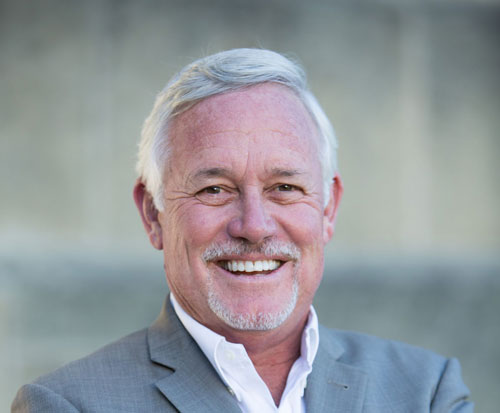
Ron Cuff.
By Commander Ron Cuff, USN Ret.
– Charlie Kirk and I grew up in the same town and attended the same schools. I met and spoke with Charlie at TPUSA headquarters about a year ago. He was killed on September 10th by a disturbed individual who may or may not have been on drugs. We will never know, because we have not received a toxicology report on the suspect. What we do know is that the suspect’s roommate was a drug user.
After 28 years of military service, I know this: An enemy that we don’t know or understand cannot be defeated. The enemy—irrational random violence- now claims innocent lives almost daily.
The military confronts disasters like this head-on. For example, if an airplane crashes, the military doesn’t just mourn the loss and move on. Exhaustive investigations, analyzing every piece of data—including toxicology—and the findings are shared publicly. This approach revolutionized both civilian and military aviation safety, reducing fatalities by over 95% since the 1970s.
We are having debates about violence prevention—gun policy, mental health funding, substance regulations, social services—but we’re ignoring the critical facts.
When someone commits an act of random violence (usually a male in his 20s), we fail to collect and analyze key data points that could inform evidence-based solutions.
Concerns about privacy and civil liberties certainly deserve consideration. But we can collect anonymized, aggregated data that protects privacy while still providing the population-level intelligence we need. We do this for traffic fatalities, infectious diseases, and other public health challenges. Why not do this with random violence?
Random violence is a problem requiring sophisticated Military/NTSB-style post-incident analysis. We must ascertain the role of various substances (legal and illegal) in triggering violence. Drug use can cause severe psychosis and schizophrenia, leading to irrational violence.
We also lack comprehensive data on other possible contributing factors: access to mental health services, economic stressors, exposure to trauma, social isolation levels, and yes—the presence or absence of positive adult male role models in our young men’s lives.
Some will argue that we should focus on structural inequities, healthcare access, and systemic reforms. Others emphasize individual responsibility, parenting, and community support. The truth? We need to attack this problem on all fronts. Accurate data will tell us where our priorities should be. This isn’t about assigning blame—it’s about solutions.
Let’s start asking relevant questions after every act of random violence.
- What data was collected, and what is missing?
- What patterns are emerging across similar cases?
- Which risk factors were present, and which protective factors were absent?
- What is the plan to prevent this from happening again?
Let’s demand legislation requiring data collection—including mandatory toxicology testing. THC, the active ingredient in cannabis, which is strongly linked to psychosis, must be included in every test. Toxicology results must be made available to public health officials, policymakers, and most importantly, the public at large.
In the meantime, let’s do what we know works. Research consistently shows that adult male mentorship of adolescent males reduces violent behavior and drug use. Whether through formal programs like Big Brothers or informal community involvement, men need to be present in boys’ lives. More men must teach or volunteer at schools, coach teams, and mentor youth.
We cannot make excuses. The oft-heard comment, “I blame the parents,” is a rationalization for inaction. We are all in this together. We can’t control parents, but we can all set a good example. We men can teach, coach, and mentor. And we must.
Commander Cuff served 28 years in the U.S. Navy as a carrier pilot, flight instructor, commanding officer, and test pilot at the Pt. Mugu Pacific Missile Test Center testing and evaluating Harpoon and Tomahawk missiles. He has dedicated 15 years to preventing drug and alcohol addiction through the SafeLaunch.org initiative that he co-founded in 2010.




Great points Mr Cuff. Parents, local community members and leaders who are in position to support ideas such as yours should take note. We are all at risk of being the next victims of horrific violence if we don’t move issues like your pointing out up the priority list!

Ron: Over 100 million of your fellow Americans have smoked pot. You don’t, no one cares but please quit trying to associate pot smoking with every evil & failure in America. Please.




Great points Mr Cuff. Parents, local community members and leaders who are in position to support ideas such as yours should take note. We are all at risk of being the next victims of horrific violence if we don’t move issues like your pointing out up the priority list!
Ron: Over 100 million of your fellow Americans have smoked pot. You don’t, no one cares but please quit trying to associate pot smoking with every evil & failure in America. Please.