
Cuesta College instructor receives Fulbright Scholar award
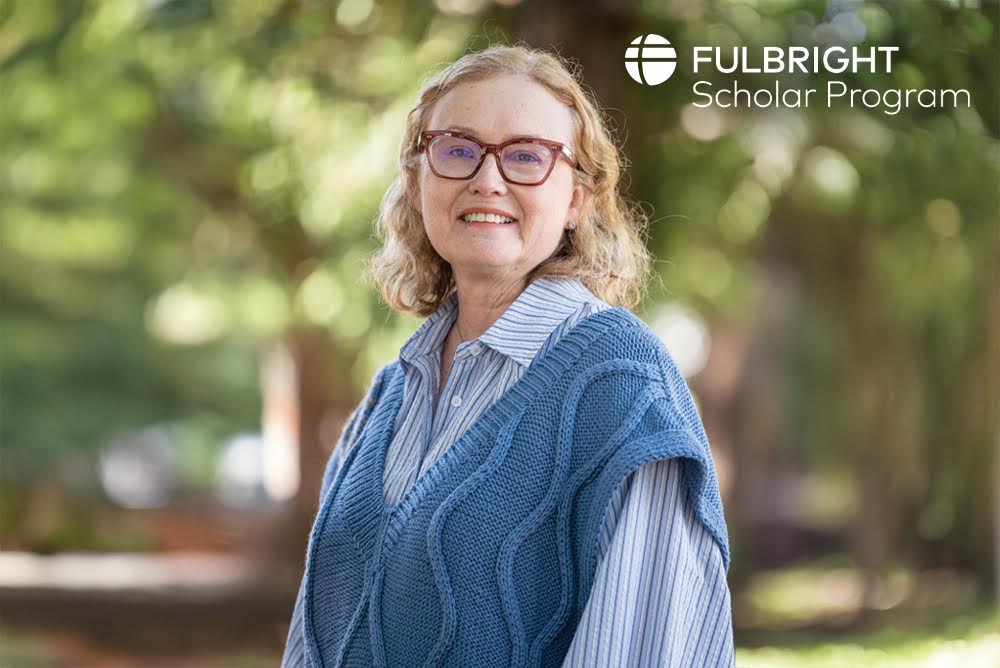
Art instructor will teach and conduct research in Lithuania
– Cuesta College art instructor Ruta Saliklis has been selected as a Fulbright U.S. Scholar for the 2026-2027 academic year and will travel to Lithuania to teach, conduct research, and collaborate with educators.
Saliklis is the second representative from Cuesta College to receive a Fulbright U.S. Scholar award and the first faculty member from the college’s Fine Arts Division to receive the honor. Aubrey Kuan Roderick received the award in 2024.
The Fulbright U.S. Scholar Program recognizes faculty members and professionals for teaching, research, and cultural exchange. Established in 1946, the program has included Nobel Prize winners, Pulitzer Prize recipients, and MacArthur Fellows.
Saliklis teaches Art Appreciation and Drawing at Cuesta College and instructs about 180 students each year. During her Fulbright appointment, she will work with Vytautas Magnus University, Lithuania’s national Science, Technology, Engineering, Art, and Math centers, and regional high schools to examine how traditional Lithuanian textile arts intersect with Science, Technology, Engineering, Art, and Math education.
Her research will explore the biology of flax fibers, the mechanics of weaving, the mathematics of traditional sash patterns, and the chemistry of natural dyes through workshops, exhibitions, and public lectures.
“This is an incredible opportunity to represent both the United States and Cuesta College in Lithuania, the country my family came from,” Saliklis said. “It allows me to build meaningful professional relationships, exchange ideas internationally, and continue research that has been an important part of my academic career.”
Saliklis first traveled to Lithuania more than 30 years ago after receiving a Fulbright U.S. Student grant to conduct dissertation research on Lithuanian textiles. Her new Fulbright U.S. Scholar award builds on that work while expanding its educational focus through Science, Technology, Engineering, Art, and Math instruction.
When she returns to Cuesta College, Saliklis plans to incorporate her international experience into project-based classroom learning that connects art, science, and local culture.
“Art teaches students how to observe, analyze, and think critically – skills that are valuable in every field,” Saliklis said. “Experiencing how another country approaches STEAM education will make me a stronger, more empathetic instructor and help me better connect with students from diverse backgrounds.”
Students will have opportunities to engage with the research after Saliklis returns by participating in classroom projects that integrate art with science, technology, engineering, and mathematics.
The Fulbright experience is expected to strengthen the college’s international partnerships and expand global learning opportunities for students.
The Fulbright Program operates in more than 160 countries and is sponsored by the U.S. Department of State to promote mutual understanding through educational and cultural exchange.
More information about Cuesta College is available at cuesta.edu. Information about the Fulbright Program is available at fulbrightprogram.org.