
Acid and tannin: Partners in wine
-A message from MWWine School-
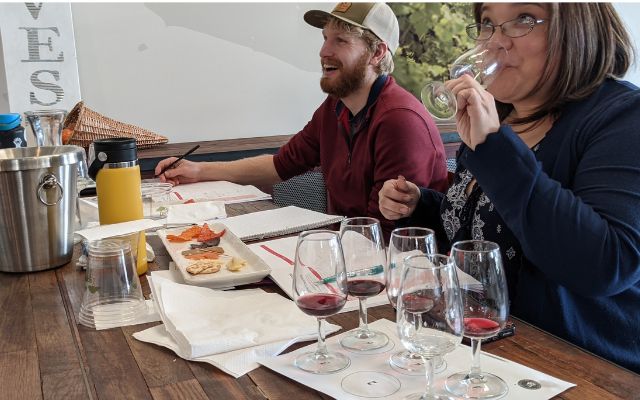
MWWine School WSET Level 1 Students in Paso Robles.
By Melanie Webber, Director, MWWine School
– You live in Paso, surrounded by vineyards and wineries, so acid and tannin are probably not alien words. But, they are often misunderstood. Understanding acid and tannin is key to not only assessing balance and quality in wine, but also to successful food and wine pairing – and, perhaps most importantly, to enhancing your enjoyment of the wine.
Acidity: Wine Refresher
One could write a dissertation about acid in wine. In a nutshell, it gives wine its freshness and zing, amplifying the fruit and contributing to balance and ageability.
How do you identify it?
Simply by noticing how much your mouth is watering. Think what happens to your mouth after squeezing a drop of lemon juice into it. The same thing happens when you take a sip of a Sauvignon Blanc, a Riesling or a Cabernet Sauvignon…and, also, when you take a sip of a Sauternes or a Tokaji, both sweet wines with very high acid, which creates a balance that makes them among the world’s great wines.
Acid is also a key consideration in food and wine pairing. In most cases, high-acid foods are ‘wine friends’ because they can make wine taste less acidic, less bitter, and more fruity. Think Chianti (a high-acid wine) with spaghetti and tomato sauce: a classic pairing, with mutually beneficial acidity.
High acid wines are also brilliant with fatty/oily foods. Not only does the wine’s acid cut through the fat, but the oil in the food is like a tiny suit of armor, coating the tongue, so the acid’s impact is decreased. This is why Champagne is a fabulous match with fried chicken, oysters and, yes, McDonald’s French fries. One note of caution on wines with lower acidity, such as Gewurztraminer or Viognier. If you pair them with high acid food, the acidity can throw them out of balance.
Tannin: The Bitter Truth
Have you ever had a cup of black tea that spent too long brewing? That drying, astringency on your palate is the tannin. But tasters often confuse tannin and acid. A good rule of thumb: for tannin, think dry mouth, for acid, think mouth-watering.
Tannins principally come from grape skins. If you chew on one, you will understand tannins in an instant. Usually, the thicker the skins the higher the tannins, which is why thin-skinned Pinot Noir, Gamay, and Grenache typically make low to medium tannin wines.
High tannins are the reason barrel aging is important for some wines: oxygen gradually seeps in to soften them. It is those tannins, along with acidity and fruit concentration, that allow premium red wines to age and develop their extraordinary complexity.
Tannins are also an important consideration in food and wine pairing. Your sensitivity to bitterness is a function of the number of tastebuds you have. The more you have, the more sensitive you will be, and the more cautious you need to be in food pairing because umami (think miso/meat) and sweet foods will increase the wine’s bitterness.
Considering the above, why is steak, which is high in umami, a good pairing with high-tannin, high-acid Cabernet Sauvignon? The answer lies with another ‘wine friend,’ salt. Steak will usually be served with plenty of it. Like acid, salt makes wine taste less bitter, more fruity, and less acidic. So next time a red wine feels too tannic, pull out the salt shaker!
Want to Learn More? Taste With Us This Summer
This is just the beginning of understanding acidity and tannin. At MWWine School, we make wine education fun, accessible, and rewarding. Whether you are a hospitality pro or an enthusiastic sipper, our WSET Level 1 and Level 2 Award in Wines courses will boost your confidence, refine your palate, and give you a globally recognized certification.
This summer, we are offering in-person courses at the breathtaking Adelaida Vineyard and Winery in Paso Robles—surrounded by vineyards, sunshine, and top-tier wines.
Paso Robles Daily News readers can enjoy 10% off course registration. Use code: PASO10

MWWine School’s Melanie Webber in a Paso Robles vineyard holding wine made by one of her students.
About Melanie Webber
Melanie Webber teaches WSET Level 1, 2, and 3 Award in Wines classes in Paso Robles at Adelaida Winery and Vineyards for her Central Coast-based wine school, MWWine School, and has helped over 700 local wine industry pros and enthusiasts achieve their certifications. She is part of the founding team of The Garagiste Festival, which launched in Paso Robles 14 years ago.