
Bitcoin Rises Despite Fed Rate Hike and CLARITY Act

Despite two significant setbacks in the space of a day, Bitcoin finished September stronger than most traders expected.
A failed Senate vote on crypto legislation and the Federal Reserve’s first interest rate increase in three years landed less than 24 hours apart, yet the world’s largest cryptocurrency barely paused before climbing to its highest level in eight months.
A Bruising 24 Hours For Crypto Policy
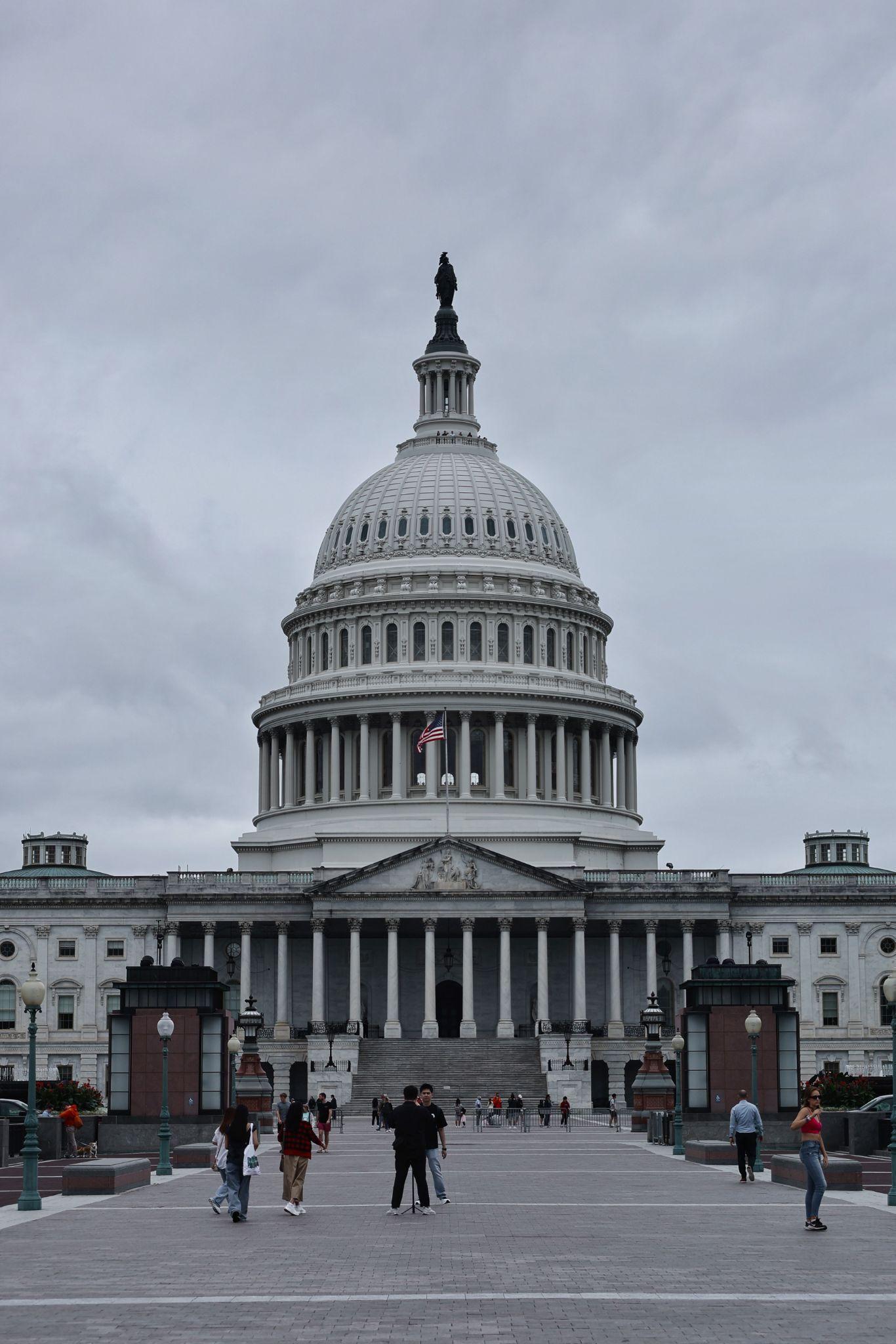
On September 15, the Senate fell one vote short of the 60 needed to advance the Digital Asset Market CLARITY Act, a bill meant to define which federal regulator oversees most cryptocurrency trading. The motion failed 49 to 50, with no Democrat voting in favor, and four Republicans joining them in opposition, effectively shelving the legislation for the rest of the year.
Supporters had hoped the bill would give exchanges and token issuers a clear rulebook after years of enforcement-driven oversight, so its failure was widely read as another year of regulatory limbo for the industry.
That dynamic played out clearly during the 2022 tightening cycle, when a rapid series of hikes coincided with what traders called a crypto winter, so anyone tracking positions on a crypto trading platform had reason to brace for a similar retreat this time around.
Analysts covering the vote noted that Bitcoin’s existing treatment as a commodity, combined with its established spot ETF market, left it less exposed to the regulatory uncertainty than smaller tokens, according to CoinDesk’s coverage of the aftermath.
Agency officials at the SEC and CFTC said they would keep building rules under their existing authority instead, though industry executives have pointed out that rulemaking by agency is generally easier to unwind through a future administration or a court challenge than a law passed by Congress.
The Fed Adds To The Pressure
The Federal Open Market Committee voted unanimously to raise the federal funds target range by a quarter point, to 3.75-4.00 percent, marking the first hike since July 2023.
In its statement, the Fed said the move would “support a timelier return” to its 2 percent inflation goal, while newly appointed Chair Kevin Warsh’s accompanying projections pointed to at least one more increase before year-end, with the median rate expected to settle near 4.1 percent through 2026 and 2027.
Higher rates typically weigh on risk assets such as crypto, since safer, interest-bearing alternatives become more attractive by comparison.
Support Held, Then Bulls Took Over
Bitcoin dipped to roughly $74,900 in the two sessions surrounding both events, but never closing below the closely watched $75,000 support level. Within a week, the price had surged around 14 percent to above $85,000, closing above its 50-week moving average for the first time in nearly a year. For anyone watching the swings unfold in real time, the pace of the reversal was a reminder that a bad headline and falling prices don’t always move in the same direction, at least not for long.
Bitcoin’s resilience through the month stood out against a tough backdrop. September combined one of the market’s historically weakest seasonal patterns with tighter monetary policy, unresolved regulatory questions, a stronger dollar and rising global bond yields, all the while the asset was still down only around 1.5 percent for the month as of late September.
By the end of the month Bitcoin made an astonishing gain of roughly 7 percent.
Institutional Money Backed The Bounce
The rebound wasn’t driven by retail traders alone. On September 21, US spot Bitcoin ETFs pulled in roughly $999 million in a single day, the largest one-day inflow since October 2025, with BlackRock, ARK and Fidelity among the biggest buyers, Yahoo Finance reported. That kind of institutional buying matters because it can absorb coins being sold into strength and reduce the market’s reliance on leveraged futures positions, which tend to amplify swings in both directions.
Fresh inflows on the two days that followed the Fed decision suggest professional money moved from a defensive posture back into accumulation almost as quickly as the headlines broke.
Final Say
Some analysts are now eyeing a move toward $95,000 to $100,000 if momentum holds, though the path isn’t guaranteed. A close back below $75,000 support, or the 10-year Treasury yield pushing past 5 percent, could just as easily trigger a pullback.
None of this changes the fact that cryptocurrency remains a not a stable asset class. Prices can swing sharply within hours based on a single vote, a single data release or a single central bank sentence, and past performance offers no guarantee of what comes next. Anyone following Bitcoin’s September comeback should treat it as a case study in how quickly sentiment can turn, not as a signal to abandon caution.
The Fed’s own projections still point to tighter policy through 2027 before any easing, and with the CLARITY Act dead for the year, crypto firms are left relying on incremental rulemaking from the SEC and CFTC rather than a comprehensive federal framework. Congress isn’t expected to revisit comprehensive market-structure legislation until at least the next session, which leaves regulatory clarity as an open question heading into 2027.