
Column: Equity vs. opportunity – navigating inclusion in Paso Schools
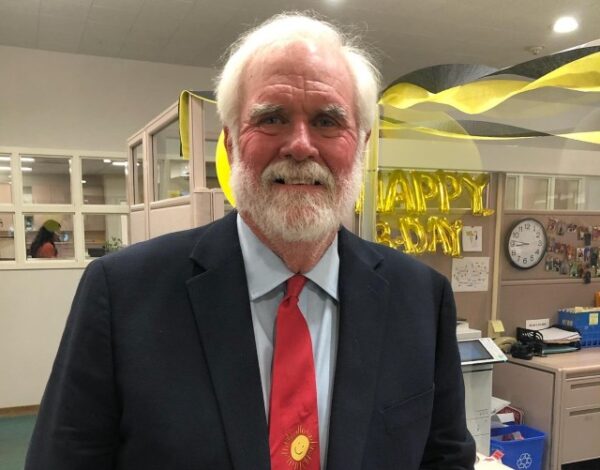
Former Paso Robles Joint Unified School District Superintendent Curt Dubost.
In DEI, the ‘D’ stands for Diversity, and the ‘I’ stands for Inclusion. The real debate lies in defining the meaning of the ‘E’
– Remember the metaphor of the “ Melting Pot” in our old textbooks used to describe the diversity of our country of almost all immigrants, or the later characterization as a “Mixed Salad”? I believe most Americans believe, as I do, that the widely diverse background of our countrymen since our nation’s very inception is a strength and not a weakness. I similarly believe our pluralistic society should celebrate the inclusion in the path to prosperity of all law-abiding people who want to work hard to achieve the American Dream.
Where the controversy and danger arises in my mind with DEI is in the “E.” If it means equity of outcomes, that’s a problem in schools and in the rest of our society and it results in the kind of “identity politics” the electorate rejected last November. Several examples in Paso Schools during my five years as Superintendent come to mind. One is the fact that the percentage of Hispanic students choosing to participate in sports and other co-curricular and extra-curricular activities at the secondary schools is significantly less than the percentage of Hispanic students in the entire student body.
Does the fact that Hispanic students don’t choose to engage in high school activities at the rate white students do mean there is either overt or unintentional systemic institutional discrimination against them? Some, such as the proponents of critical race theory, might so argue. Quite the contrary, every effort is made to encourage more participation of all students. The fact that the participation rate is an inequitable outcome doesn’t mean there is discrimination.
It rather may mean there are fewer after-school opportunities overall for especially younger Hispanic students or that they simply had other things they either chose or had to do. One of the problems I saw during he years I was Superintendent in San Miguel was the relative absence of either school or community-based after-school activities like youth soccer, Little League, and Pop Warner. We worked hard to try to get Lillian Larsen and Cappy Culver teams into North County youth sports leagues, but cost, distance, and logistics were big problems.
I bring this up as an illustration of what I see as the critical distinction to be made between equity of outcomes and equality of opportunity. Inequitable outcomes certainly can be legitimate causes for examination and concern, but to simply compare and contrast outcomes and conclude racial identity is the only variable is just silliness. What we should insist upon is that we all get a fair shot to compete on a relatively equal playing field where no one is discriminated against.
There is no doubt many kids come from privileged backgrounds. My family is by no means wealthy, but my four grandchildren I share with their immigrant mother, as I mentioned in my last column, certainly do enjoy many advantages. All four have parents who are UC graduates. They engage in adult discussions using a college vocabulary at home in English daily at the dinner table.
Their parents can help them with their advanced schoolwork and they each have their own quiet rooms in which do their homework. If they truly need anything either their parents or their grandparents make sure they get it. They play in youth leagues. They are on traveling club teams. They have access to professional coaches and tutors. They ironically likely would qualify for further advantages in some instances based on the ethnicity of their Mexican-American grandmother.
Does the pursuit of equity of outcomes mean those extra supports we can afford for them should be curtailed? I emphatically say no. They should not ever be put at a disadvantage because of their relatively privileged upbringing. Their parents have a right if not a responsibility to do everything they can to love and support them, hopefully without spoiling them.
This reminds me of the often-cited illustration of the difference between equality and equity with the three kids standing on one block each to look over the solid outfield fence of a ball game. The shortest kid still can’t see the game in the equality frame. In the equity frame, the block on which the tallest kid stands is taken from him and given as a second block to the shortest child allowing all three then to see the game. An updated version removes the solid fence replacing it with a chain link so all three can see without assistance.
Yes, depending on the context, take down the barrier or give another step to the least privileged, but don’t take the block beneath the tall kid. Equality of opportunity doesn’t mean lowering standards or ignoring merit.
It is not ok for some kids to have fewer opportunities to make up for past injustices; two wrongs don’t make a right. The Supreme Court first so ruled in 1978 (UC Regents vs Bakke) which ruled holding sixteen percent of medical school admissions for minorities was illegal, but that using race as a consideration was permissible. Bakke was a white UC Davis Medical School applicant who was denied admission though he had higher objective scores than some minorities who were admitted.
The precedent commonly became known as “Reverse Discrimination” and raised the question, now resolved by a later court, as to whether it is permissible to be unfair to some to make up for unfairness in the past, or is that precluded by the 14th Amendment’s guarantee of equality for all? The court in 2023 ruled 6-3 that affirmative action did indeed violate the equal protection clause of the 14th amendment and ordered its end as a college admissions criteria. (Students for Fair Admissions vs. Harvard).
If, however, the “E” in DEI stands for equality of opportunity, then I’m all in. The first and foremost requirement of this must always be that no one is discriminated against, not Hispanic females and not white boys. Former Paso board member, Dorian Baker, was the first to notice the disparity in participation rate in leadership and advanced studies between girls and boys, which was huge. I thought no reasonable Americans would want to penalize boys unfairly now in order for girls to make up for past discrimination. I was wrong and I have friends and colleagues who think that it’s just fine if 90 plus percent of the students in leadership roles at our schools are girls as the opposite used to be the norm.
I’m fine if the boys truly don’t want to lead, but find it odd closer to half the leaders aren’t boys. One can speculate as to if that’s a product of fewer homes with dads, girls showing more interest in leadership, or other factors. I certainly don’t want to go back to the days when girls were told not to waste their time on an education as they’re just going to get married and build a family, and to stick to “traditional” female roles. If that choice is a “stay-at-home mom” then great, I applaud the decision, but access for women to all other career options must always remain.
I also don’t want to return to the days of overt discrimination before the Civil Rights Movement and the dismantling of Jim Crow, the Tulsa Massacre, and the murder of countless people of color. Go to the Jackson, Mississippi civil rights museum and read on each pillar for each successive year the names of the black boys who were lynched and their alleged “crimes” such as “whistled at a white woman.” Stand at Nelson Mandela’s cell outside Capetown. Remember Jackie Robinson. Think of Atticus Finch and Tom Robinson. Think of all the qualified applicants who were never even given the opportunity to interview for a job simply due to the color of their skin.
I mentioned also in my last column the extra state money schools receive to educate “Unduplicated” students. This money is used to provide more opportunities to those kids, literally to level the playing field by providing the school with extra resources. An illustrative example of how we used a small amount of those funds in Paso was the expansion of elementary sports programs, this last year with the addition of coed flag football, which was a huge success. This offered opportunities for more kids to participate at no cost and at their neighborhood school. Many thanks to all the coaches and parents who made it work and a special shout out to elementary student, Gunner Perales, for having the courage to come before the board with his proposal.
The goal is for all kids to have wholesome activities available after school and specifically to afford that to kids who haven’t had the kinds of opportunities to participate and compete the more privileged are afforded. Former Athletic Directors Kelly Burbank and Torie Loney did a great job expanding youth sports offerings and actively encouraging all to play. This was also a way to give students who did not have the opportunity to participate in sport-specific traveling club teams and the like to have added coaching and experience to encourage them to go out for and play sports at the high school. Programs like AVID and GANAS at the high school are other examples of successful interventions funded at least partially by the extra money for unduplicated students.
Other programs in and out of the classroom address ongoing issues of continued if isolated instances of bigotry, homophobia, and racism in our schools. Racist taunting of black children, particularly by younger Hispanic students, sadly continues as do homophobic slurs, at least as recently as last year. Surely no responsible person wants those issues ignored or dismissed as ”harmless pranks,” which is how one board member described the theft and crude video of feces on a rainbow flag stolen from a classroom at the high school several years ago. These problems must be addressed with transparency, and I would argue, new ideas not a rehash of past efforts. Combatting bullying by promoting kindness and yes perhaps most importantly encouraging empathy must be a priority. Don’t I recall the definition of a sociopath is a lack of empathy?
I would argue though that the problem needs to be addressed not in separate programs that take time from the primary academic purpose of education. I instead would insist that empathy and kindness be “taught” through a renewed emphasis in our mandatory curriculum of the great works of literature history and philosophy and great thinkers of the past. It would include many of the books listed by E.D. Hirsch in the “Core Knowledge” series “What Every First Grader Should Know.” Books like Native Son, Bury My Heart at Wounded Knee, and To Kill a Mockingbird come to mind. Hirsch calls this “Cultural Literacy” which means the common knowledge and experience we must share to have a cohesive culture while maintaining our individuality and freedom. We all must know all of our country’s unvarnished history, both sins and great accomplishments.
By the way, as Dr. Hirsch has quipped, cultural literacy is a fancy way of saying it’s what we need for us to have in common for us both to “get the joke.” A good illustration of this is in many of the old “Far Side” cartoons such as the one that depicted Michelangelo as an infant doodling on the ceiling above his crib. If you don’t know about the ceiling of the Sistine Chapel it makes no sense.
I’d also have mandatory curriculum on the history of and beliefs of comparative religions as so many of the world’s crises are religious in nature and we’d better try to understand each other’s beliefs so we might avoid and not provoke wars. This can be a benefit of our diversity. Let’s hash out honestly and openly a compromise curriculum that any reasonable person can support to address racism, homophobia, misogyny, xenophobia, et al within, not apart from, the academic curriculum in history, literature, civics, and wherever else appropriate to the curriculum.
Let’s not throw the proverbial, ”baby out with the bath water” and dismiss the highly desirable benefits of Diversity and Inclusion because the “E” in DEI came to mean equity of outcomes not equality of opportunity. As long as the criteria for selection doesn’t include race or another “protected class” as either a positive or a negative factor, no unbiased person can argue against fundamental fairness.
I’ll also freely admit that if two candidates met all of the qualifications for a teaching job and were, in my objective judgment, equally academically competent, I would eagerly seize the opportunity to hire the candidate who could best serve as a positive role model for underrepresented students. Unless there is objective evidence of intentional discrimination this shouldn’t, however, be under the threat of a costly Office of Civil Rights investigation or other litigation just because our faculty isn’t as diverse as our student body.
We must have as our highest priority the hiring of the strongest academic and vocational instructors, and not compromise excellence in the pursuit of diversity. Even Martin Luther King opposed Affirmative Action as anything more than a temporary adjustment. He feared otherwise hiring criteria would be compromised and it then be falsely assumed that any minority hired was not chosen solely due to stellar qualifications. That in no way though implies a return to discrimination.
In conclusion, I support Diversity, Equality of Opportunity, and Inclusion of all. My next column will be my thoughts on the proposed dismantling of the federal Department of Education.
– Former Paso Robles Joint Unified School District Superintendent Curt Dubost
Editor’s note: Opinion pieces and letters to the editor are the personal opinions of the authors and do not necessarily reflect the views of the Paso Robles Daily News or its staff. We welcome letters from local residents regarding relevant local topics. To submit one, click here.




Wasn’t this the guy pulling 2 salaries from 2 different school districts at one time? Does he think anyone is going to read his novel in a section not made for novels?
We have the Constitution of the United States and The Bill of Rights. The gentleman writing this piece seems to like to hear himself “think about what he thinks about.” We don’t need the schools to figure out why some people want to be in sports and others don’t. That is not the job of the government.
Hire the best person for the job. Don’t base your hiring practices on the color of a persons skin, their sex or because they grew up in a bad neighborhood or had rotten parents.
Not every child needs to go to college.
The government is not your parent.
Our taxes are being wasted and pocketed by people that want to ponder their thoughts and not really work. They should do that on their own time.
Stop government abuse, waste and fraud.



Wasn’t this the guy pulling 2 salaries from 2 different school districts at one time? Does he think anyone is going to read his novel in a section not made for novels?
We have the Constitution of the United States and The Bill of Rights. The gentleman writing this piece seems to like to hear himself “think about what he thinks about.” We don’t need the schools to figure out why some people want to be in sports and others don’t. That is not the job of the government.
Hire the best person for the job. Don’t base your hiring practices on the color of a persons skin, their sex or because they grew up in a bad neighborhood or had rotten parents.
Not every child needs to go to college.
The government is not your parent.
Our taxes are being wasted and pocketed by people that want to ponder their thoughts and not really work. They should do that on their own time.
Stop government abuse, waste and fraud.