
Column: Our dangerously divided democracy
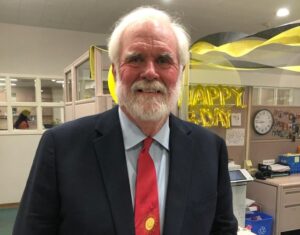
Retired superintendent Curt Dubost.
– Recent despicable assassinations of both Charlie Kirk and Melissa Hartman tragically are, at least in part, the heinous consequences of our nation’s increasingly extreme cultural and political divisions. They have also led to increased attempts to restrict freedom of speech and discourage fair elections, which strikes at the most fundamental of our democratic principles.
When I became Superintendent of Schools in Taft in 2003, one of the first speaking engagements at which I was introduced was a service club dinner where the speaker was a young assemblyman from Bakersfield. I sat next to him, and with the November general election approaching, I asked him how his reelection campaign was doing. He replied he had nothing to worry about in the general election, nor did many, if not most, incumbents. He added that it was only in the partisan primary that he would possibly be defeated by a candidate who could seize on any compromise votes he made in office that were considered not to be conservative enough for his base.
He added that the same logic applied to the Democrats and was due to bipartisan support for gerrymandering to protect incumbents from both parties from losing their seats. He added that the inevitable result was candidates not interested in finding common-sense compromise solutions to appeal to centrist moderates and find consensus, and instead dedicated solely to energizing their base to get out their voters and discourage their opponents from voting. He predicted dire consequences for the future of our democracy. One need only look at extremely ideological legislation passed by partisan supermajorities on both sides to see how right he was.
Gerrymandering is the manipulation of electoral district boundaries to the advantage of one party or group over another. The term originated in 1812 when then Massachusetts governor and later Vice President Elbridge Gerry, created a voting district in Boston that had the shape of a salamander. Hence was born the combined term “gerrymandering.” It was perhaps best described by Morgan State Professor Wayne Dawkins as “politicians picking voters rather than voters picking politicians.”
I grew up in the 1960s and was in school when civil rights reforms were passed and court decisions were rendered that sought to remove barriers to voting rights for all Americans. Jim Crow laws that required literacy tests, poll taxes, and other obstacles to participation by both racial minorities and poor whites were largely outlawed. This was not just a problem in the Deep South. California had many restrictions designed specifically to disenfranchise Native Americans, especially Asian Americans, as well as Blacks. I naively assumed no one would ever want to return to such decidedly un-American, unfair political practices.
Much has been made of allegations of foreign influence in our elections. We all grew up with reports of communist dictators and others like Saddam Hussein holding phony elections where the outcome was never in doubt. Many experts now believe any attempts to unfairly influence elections in Western Democracies are not primarily intended to favor one candidate over another but more importantly, long-term to generate mistrust of our electoral process and have us appear to be no more legitimate than the dictators.
Turnout in our elections lags far behind many other democracies. Concerns about fairness lead to apathy and cynicism. I for one respect most the candidates who encourage ALL eligible citizens to register to vote and do so, regardless of for which candidate or party. Wouldn’t it be great if both parties sought to encourage rather than depress voter participation by ALL and then sought to win by convincing a majority of those voters of the wisdom of their proposals?
By the way, the legislator at that dinner was Kevin McCarthy.
– Former Paso Robles Joint Unified School District Superintendent Curt Dubost
Editor’s note: Opinion pieces and letters to the editor are the personal opinions of the authors and do not necessarily reflect the views of the Paso Robles Daily News or its staff. We welcome letters from local residents regarding relevant local topics. To submit one, click here.