
How To Use Elk Hair Caddis For Fishing
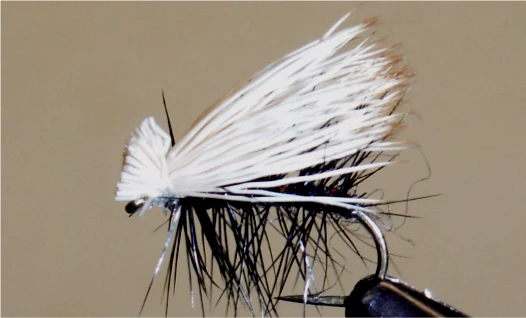
Experience the excitement of catching a fish while enjoying the peace and quiet of the outdoors with fly fishing. Although anglers use many other flies, the Elk Hair Caddis is one of the greatest.
This unusual fly catches many fish, especially trout, and is easy to see. It also floats on the water. It looks like a mature caddisfly.
Having more fun and improving your fishing abilities requires that you know how to use this amazing fly. In addition to offering some practical advice and methods for using it, this article will cover the development and history of the Elk Hair Caddis.
The History and Design of the Elk Hair Caddis
Elk Hair Caddis originated in the 1950s by the well-known American fly tyer and fisherman Al Troth. Trout adored caddisflies, so he wanted to create a fly that resembled an adult caddisfly. Its ease of use and effectiveness led to the fly’s popularity.
Elk hair is used to manufacture the famous Elk Hair Caddis, which floats on the water and has the realistic appearance of a bug. Fish are more tempted to bite because of this.
This robust, easily recognizable fly has an elk hair wing and a dubbing and hackle body. Like a battling caddisfly, it stays afloat on the water thanks to the elk hair.
Materials and Tying Instructions
Understanding the necessary components and tying procedures will help you effectively utilize the Elk Hair Caddis. Here’s a quick look.
Materials
- Hook: Sizes 10–18 for the standard dry fly hook
- Thread: 8/0 or 6/0 in olive, brown, or black.
- Body: Dark, olive, tan, or black dry fly dubbing for the body
- Wing: Elk hair on the wing
- Hackle: Matching-colored, dry fly hackles
Tying Steps
Step 1: Prepare the Hook: After placing the hook in the vice, begin sewing at the bottom of the hook and work your way back to the curved section.
Step 2: Make the body. Wrap the thread towards the front with some dubbing to create a tapering shape.
Step 3: Trim the sparse underside from a tiny cluster of elk hair, then align the tips.
Step 4: Fasten the Wing: Above the hook, directly below the eye, place the lined-up elk hair and firmly fasten it with the thread.
Step 5: Attach the Hackle: Fasten a dry fly hackle at the base of the wing, looping it in front and tying it in close to the retina.
Step 6: Finishing Touches: Add a whip finish to the thread and a drop of head cement to add a little bit of strength.
Benefits of Using the Elk Hair Caddis
1. Versatility
A fantastic fly for fishing in many locations is the Elk Hair Caddis. It works on both quiet lakes and swift-moving streams. Because it floats so well, it’s ideal in choppy conditions where other flies may sink.
2. Visibility
With its enormous wings and great buoyancy, the fly is easily identified by anglers. Seeing in low light or choppy water is made simpler by this. Having a clear view of it aids in their ability to hook fish.
3. Attractiveness
Fish find it impossible to resist the Elk Hair Caddis because it appears so realistic as it travels over the water. Fish see the fluttering elk hair wing as a delectable food, as it resembles a real caddisfly.
Strategies for Fishing with the Elk Hair Caddis
1. Match the Hatch
The process by which caddisflies hatch in nature should be understood and imitated. Fishing success will be significantly increased if you make your Elk Hair Caddis appear exactly like theirs!
2. Proper Presentation
You want to fool the fish by making your fishing appear highly realistic. Float the bait downstream as if it were a natural part of the river, then toss your line upstream. If you drag it too much, it can appear strange. To make it appear natural, shorten your leader and adjust your line.
3. Dead Drift Technique
Fishing the Elk Hair Caddis with the dead drift is a common technique. Ease the fly into the water and let it float downstream after being cast upstream. The appearance is that of a caddisfly lodged in the water, providing fish with a simple meal.
4. Skating the Fly
It may be pretty successful in moving the caddisfly over the water’s surface when there are a lot of them present. You may do this by giving the fly little tugs or twitches as it floats along. Like a caddisfly, the fly appears to be fluttering. Fish that are really agitated by this wiggling movement may bite the fly quite forcefully.
5. Dry-Dropper Rig
A dry-dropper rig’s primary fly of choice is the Elk Hair Caddis. Under the dry fly, you may tie on an emerger or nymphal design. Although the nymph is like an added treat under the surface, the caddis floats on top and draws fish.
Bottomline
An essential tool for every professional angler is the Elk Hair Caddis. It resembles a real caddisfly, is really adaptable, and floats nicely. Trout and other freshwater species love to bite on this fly. You can increase your fishing success and capture more fish if you understand how it’s produced, why it works so well, and how to use it properly.
Your go-to fly for all types of fishing excursions can be the Elk Hair Caddis if you have patience and a lot of skill. You will enjoy both the thrill of bringing in a large fish and some quiet time in the great outdoors.