
Retired superintendent addresses academic standards, expectations in schools
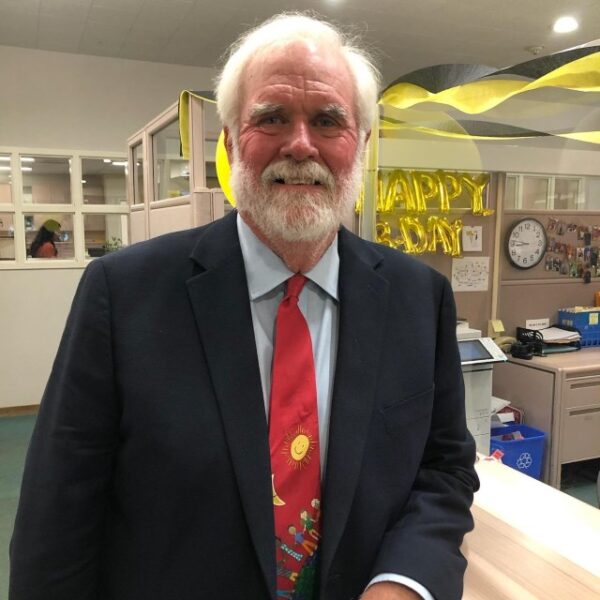
Former Paso Robles Joint Unified School District Superintendent Curt Dubost.
– As many are aware, I retired on June 30 after spending almost all of my soon-to-be 70 years going to school daily in some capacity, for the last five years as superintendent of Paso Schools. I previously had served as Superintendent in San Miguel, Taft, and Templeton starting in 1987. Previous to that I was a secondary English teacher and site administrator in the Sweetwater District south of San Diego and before that an English teacher at Homestead High School in Cupertino while I finished my master’s degree at Stanford having previously earned a bachelor’s degree there as well. I also earned an Administrative credential at San Diego State and a doctorate in Educational Administration at USC.
I am pleased to offer a monthly column about issues of interest related to education. They are not intended to be scholarly pieces rather solely my personal opinions based on my experience and training. I hope they are of interest and spark some discussion about the current state of public education and how it can and must be made better.
Equity, expectations, and excellence in our public schools
Academic excellence used to be the stated and practiced primary goal of every school at which I worked. Interview questions focused on how I might as a teacher, then principal, and finally as Superintendent improve academic instruction and increase learning at the school at which I had applied. Test scores were the most obvious means by which to judge that progress and this movement reached its peak during the second Bush administration with the bipartisan “No Child Left Behind” program and high-stakes testing on which it primarily focused.
In California, we had the Academic Performance Index which gave each school an individual score reflecting how well its students performed on a yearly test. Real estate ads touted the API of higher-performing schools and competition was fierce. Predictably, this reform fizzled as it was statistically impossible for all students to perform above average on a norm-referenced test. Remember Garrison Keillor’s fictional Lake Wobegon where all children are above average?
Test validity and reliability were also always in question. How hard students tried on a test that “doesn’t count” individually was always a confounding variable. Research also showed that roughly half of the schools or individual classes that outperformed expectations involved cheating by adult staff either for monetary gain or career advancement.
Critics rightfully also lamented the absence of balance of academic and vocational programs and the lack of focus on the “Whole Child” rather than one numerical test score to determine the efficacy of a school and the progress of its students. The curriculum expanded to areas formerly considered not within the school’s purview. Persistently lower scores in schools with high populations of kids from poverty, those learning English as a second language, homeless, foster, and other special needs (what we now refer to as “Unduplicated” students) led to demands for more of an emphasis on equity of outcomes rather than on academic excellence.
There is simply no question that this emphasis on equity has in many instances lowered expectations and reduced standards as gaps in scores between students of different demographics persisted and theories like Critical Race were suggested as causes of those gaps. High-priced consultants and programs that seek to achieve both equity and excellence are much in demand, the hope being that a school can achieve both. I fear that is seldom reached despite the anecdotal evidence of remarkable results, which often end up being made into a movie going back to the famous AP scores at Garfield High with Calculus teacher Jaime Escalante and the movie “Stand and Deliver.” If only such results were replicable and not exceptional.
This doesn’t mean we should give up. It does mean we need to try some radically different approaches that are working elsewhere.
The truth is we don’t have many truly exceptional non-magnet/charter public schools, and the reasons are fairly simple. First, ask foreign exchange students from almost any country in the world and they will tell you the academic workload in American schools is dramatically less demanding than in their home country. They will comment on the emphasis here instead being on having an active social life, playing sports and participating in various school-sponsored activities. Learning a second language to fluency is rarely a priority. Some students do still thrive and go on to prestigious universities or highly successful careers not requiring college as a prerequisite, but in general academic standards and expectations are not high.
Academic focus, though, is unfortunately not what many parents want. Their goal is happy kids without a lot of homework or rigor while developing physically, socially and emotionally. Not a terrible outcome, but not one that has high academic expectations. Also, parents often think many core academic classes are a waste of time and they want their children learning a marketable skill and how to balance a check book rather than studying history ,applying algebra or reading Hamlet. There are, of course, many exceptions to these statements, but I fear they are ever fewer in number. The complaints I mostly heard had to do with some perceived injustice rarely if ever related to academic progress.
From the perspective of a classroom teacher I can also tell you it is very hard to maintain high expectations. It is really hard work to challenge students to strive to improve and to follow up with challenging assignments and tough standards. Parents, students, and some teachers complain. I vividly recall as a teacher being told by colleagues to quit assigning so much writing and use tests that could be graded electronically.
Do know that really high-quality core academic classroom teachers are our real superstars and they need to be paid better while a few of their brethren need to find a different career? More on that topic to come.
School job interviews today are dominated by questions unrelated to improving academic performance. Social and emotional and other non-academic objectives are at least as highly prioritized, often as an issue to be addressed before academics can even be a focus. Just this last year the principal here in Paso whose students achieved the most improved academic scores was heavily criticized by some parents and staff and frequently attacked personally on social media.
Can we have excellence, high expectations, and equality of opportunity ( as opposed to equity of outcomes)? Yes I believe so but not under the current educational system. I wonder at times just how much of the last five years I was actually able to focus on efforts to improve core academic instruction. Maybe ten percent? How much time in Board meetings was actually spent on the same?
I do still believe in public education and know now more than ever that our schools need to do better academically. Getting partisan politics out of our schools would be a great first step.
In upcoming columns, I will describe how I believe teacher tenure can be reformed, how student academic growth can be fairly measured using achievable individual goals, and how terrific teachers can be recruited, supported, and retained with a salary based on merit as verified by measurable results.
In closing I will try to include in each column a concrete example, local if possible, to illustrate my thesis. Some years ago my wife and I were dropping off some spare clothes at the Goodwill in Atascadero. The receiving bin was overflowing and I picked up an old textbook from the early 1960’s that was on the ground. In it was a page-long essay written in perfect cursive in ink. There were no spelling, grammar, or punctuation errors. The topic was mildly interesting and it was logically presented with an introductory paragraph, supporting examples, and a non-repetitive conclusion. I can say with confidence it might well have won any county-wide writing contest in recent memory.
The teacher’s comments were as follows, (paraphrasing) “You plan to go to college yet use a high school vocabulary with few polysyllabic words and don’t vary your sentence structure. You are capable of much better writing. B+.”
– Former Paso Robles Joint Unified School District Superintendent Curt Dubost
Editor’s note: Opinion pieces and letters to the editor are the personal opinions of the authors and do not necessarily reflect the views of the Paso Robles Daily News or its staff. We welcome letters from local residents regarding relevant local topics. To submit one, click here.