
County reports surge in valley fever cases
Valley fever is known to increase after periods of drought followed by heavy rain, according to county health officer
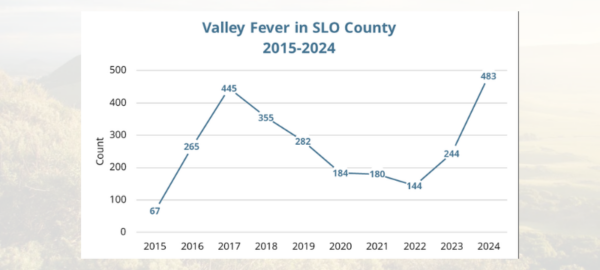
– San Luis Obispo County recorded its highest number of Valley fever cases in 2024, with 482 infections reported to the Public Health Department during the calendar year. This figure nearly doubles the 244 cases reported in 2023 and surpasses the previous record of 445 cases in 2017.
“This increase is not unexpected, as Valley fever is known to increase after periods of drought followed by heavy rain,” said Dr. Penny Borenstein, county health officer. “We’ve been working to ensure our healthcare providers and community know to be on the lookout for this disease and know how to reduce their risk. If you experience flu-like symptoms such as fever and cough for more than a few weeks, I recommend talking with your healthcare provider and asking to be tested for Valley fever.”
Valley fever is caused by the fungus coccidioides, which lives naturally in soil in San Luis Obispo County, as well as in neighboring counties, the Central Valley region, and other parts of the southwest. When soil is disturbed by wind, digging, driving, or other activities, spores from the fungus can become airborne and inhaled, leading to infection.
About 60 percent of those infected do not experience symptoms or require treatment. Approximately 30 to 40 percent develop flu-like symptoms but recover without medical intervention. Roughly one percent of symptomatic individuals develop a more serious form of the disease, where the infection spreads throughout the body.
Heavy rainfall following drought conditions can increase the amount of the fungus in soil, elevating the risk of infection.
The Public Health Department advises residents to limit exposure to airborne dust to reduce risk. People should avoid dusty areas, especially on windy days. If exposure is unavoidable, individuals are encouraged to wear an N95 mask and dampen soil to keep dust from becoming airborne. Drivers in dusty or windy conditions should keep car windows closed and set air circulation to recirculate.
Valley fever is not contagious and cannot be spread between people or animals. However, animals such as dogs, cats, and horses can contract the disease the same way people do—through exposure to contaminated dust.
More information is available on the Public Health Department’s Valley Fever page or by calling (805) 781-5500. Additional resources include the California Department of Public Health and the Valley Fever Center for Excellence.