
Slots vs. Table Games in Slovenian Casinos: Where Does Your Money Last Longer?
-A message from Rabona Casino-
– Anyone who has spent time at a casino knows the distinct pull of both slot machines and table games. The bright lights and cheerful sounds of the slots compete with the social atmosphere and strategic depth of blackjack, roulette, and poker tables. But beyond personal preference, there’s a practical question every Slovenian player should consider: which option gives you more playing time for your money?
The answer isn’t as simple as picking one over the other. Your bankroll longevity depends on several factors, including house edge, betting pace, minimum wagers, and your playing style. Understanding these elements helps you make smarter decisions about where to place your bets and how to stretch your entertainment budget further.
The Math Behind Your Playing Time
When comparing slots and table games, the house edge stands for the casino’s built-in advantage expressed as a percentage. This figure directly affects how quickly your money disappears over time.
Slot machines typically carry house edges ranging from 2% to 15%, though most modern video slots fall between 5% and 10%. The exact percentage remains hidden from players, as Slovenian casinos aren’t required to disclose this information. Most international jurisdictions (MGA, Curacao) mandate minimum return-to-player percentages, but individual machines vary widely within those parameters.
Table games offer more transparency and generally better odds. Here’s how popular options compare:
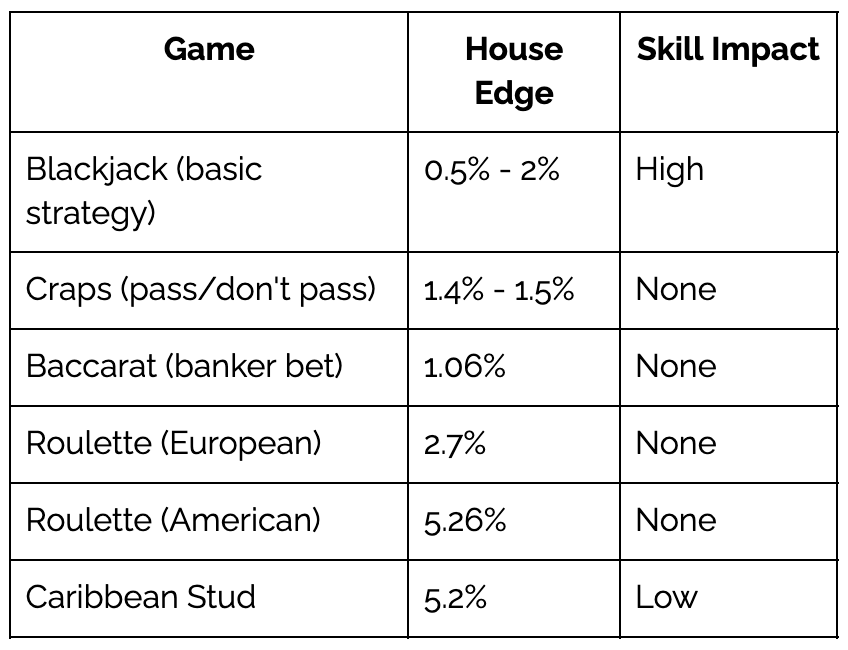
These percentages tell only part of the story, though. The house edge describes long-term mathematical expectations, not your experience during any single session.
Speed of Play Changes Everything
The pace at which you place bets matters just as much as the house edge. Think of it this way: losing 2% of each bet hurts less when you’re making 30 bets per hour compared to 600 bets per hour.
Slot machines operate at blazing speed. Modern video slots process 600 to 800 spins per hour when you’re playing at a normal pace. Players using autoplay features or rapidly tapping buttons can exceed 1,000 spins hourly. This rapid-fire betting means the house edge grinds away at your bankroll relentlessly, even if the percentage seems reasonable.
Table games move considerably slower. Blackjack averages 60 to 80 hands per hour at a full table, while roulette spins occur roughly 30 to 40 times hourly. Craps maintains a similar pace. Even single-deck blackjack with just you and the dealer rarely exceeds 200 hands per hour.
Let’s demonstrate the practical impact with a concrete example. Imagine you have $500 to spend on an evening at the casino.
Playing slots at $1 per spin with a 7% house edge at 600 spins per hour means wagering $600 hourly. Your expected loss runs $42 per hour. At this rate, your $500 bankroll lasts approximately 12 hours in theory, but variance means you could bust out much sooner or run longer.
Switching to $10 blackjack with a 1% house edge at 70 hands per hour means wagering $700 hourly. Your expected loss drops to just $7 per hour. Theoretically, your $500 could sustain over 70 hours of play, though again, variance affects actual results.
The math clearly favors slower-paced games with better odds.
Minimum Bets and Betting Flexibility
Penny slots sound budget-friendly until you realize most require betting on multiple paylines. A penny slot with 50 mandatory lines actually costs 50 cents per spin minimum. Many players bet considerably more to activate bonus features or increase potential payouts.
Table games traditionally required higher minimum bets, but this landscape has shifted. Many casinos now offer $5 or even $3 blackjack tables during off-peak hours. Some sites feature stadium gaming with electronic betting terminals where minimums drop to $1 or $2 for games like roulette and baccarat.
Slots provide one advantage here: you control your exact bet amount. Table games often lock you into fixed denominations. You may not be able to bet $7.50 on a hand of blackjack, but you will definitely spin a slot for that amount.
This flexibility matters for bankroll management. If you’re running low on funds, dropping from 75 cents per spin to 40 cents keeps you in action longer. Table game players must either continue at their minimum or leave the table.
Volatility and Bankroll Swings
House edge and betting pace explain average outcomes, but volatility describes how bumpy the ride gets. High volatility means bigger swings both up and down, while low volatility produces steadier, more predictable results.
Slots range wildly in volatility. Classic three-reel games typically show low volatility with frequent small wins. Modern video slots often feature high volatility with extended losing streaks punctuated by occasional massive payouts. Progressive jackpot slots come with extreme volatility, as tiny portions of each bet fund enormous prizes that rarely hit.
Table games generally offer lower volatility than slots, though variations exist. Blackjack provides relatively steady outcomes when you follow basic strategy. Craps and roulette deliver moderate volatility. Games with side bets like Three Card Poker increase volatility when you chase bonus payouts.
For making your money last, low volatility works in your favor. You’ll experience fewer dramatic swings and can better predict how long your bankroll survives. High volatility games produce exciting moments but also rapid losses that end your session prematurely.
Practical Volatility Impact
Consider two scenarios with identical house edges of 3%. A low-volatility slot might see your $100 gradually decline to $85 over an hour of play. A high-volatility slot could drop you to $40 within 20 minutes, spike you up to $180, then crash you down to $25, all within that same hour.
Both scenarios result in similar mathematical expectations over thousands of spins, but the high-volatility experience feels completely different and might end your fun much faster.
The Skill Factor
Blackjack stands apart from other casino games because proper strategy significantly reduces the house edge. Players using basic strategy face roughly 0.5% house edge, while those making poor decisions can inflate that figure to 2% or higher.
Learning basic strategy takes effort but pays dividends. Strategy charts show the mathematically correct play for every possible hand combination. Following these guidelines transforms blackjack from a game of chance into a game of skill where your decisions directly impact results.
No equivalent skill element exists for slots. Every spin operates independently with predetermined odds. Picking games with better pay tables helps slightly, but you can’t improve your chances through skillful play during actual spins.
Video poker occupies the middle ground. Perfect strategy reduces the house edge substantially on certain machines, sometimes to below 1%. However, finding these favorable machines requires knowledge and research, and they’re becoming harder to locate. But, you can find detailed casino info relatively easily — independent review websites compare RTPs and other parameters across different gambling sites that run in Slovenia.
Final Word Before You Choose
Your playing style preferences matter just as much as mathematical analysis. Some Slovenian players find slots relaxing and enjoy the solo experience without pressure or required decisions. Others thrive on the social interaction and strategic thinking that live tables provide.
For pure bankroll longevity, table games win decisively. Slower betting pace combined with better odds means your money lasts substantially longer. But entertainment value isn’t purely about time spent. If you genuinely enjoy slots more than table games, the faster pace might be worth the cost. Budget your casino visits as entertainment expenses and choose games that maximize your fun instead of focusing on mathematical efficiency.
Ultimately, learning the math behind casino games empowers you to make better decisions. Knowledge doesn’t guarantee winning, but it helps you play smarter and make your money last as long as it is technically possible.
Written by Ellie Yantsan